Direct answer
Verizon copper retirement POTS migration proof packet: what buyers need to know
Verizon's copper-retirement filing is a POTS migration proof event for business-phone buyers. Legacy analog lines often support voice, alarms, fax, elevators, modems, gate phones and emergency procedures that are poorly documented. Buyers should require a POTS Migration Proof Packet before any cutoff: every number, location, device, 911 record, battery assumption, failover route, notice and test result must be tied to an owner.
This brief cites the source announcement and translates the event into a buyer framework. Verify current vendor terms before changing phone, messaging, or AI routing.
What happened
- DataRemote reported that Verizon filed a Section 214 application with the FCC to discontinue traditional copper-based POTS service across portions of nine states and Washington, D.C.
- The report said the application affects hundreds of thousands of customer locations and targets discontinuance on or after November 30, 2026, subject to FCC approval.
- FCC Section 214 discontinuance processes require public notice and give affected customers, local governments and other stakeholders a comment path before service changes proceed.
- Verizon's public network-transition materials separately explain that it is replacing older copper facilities with newer technologies in affected areas.
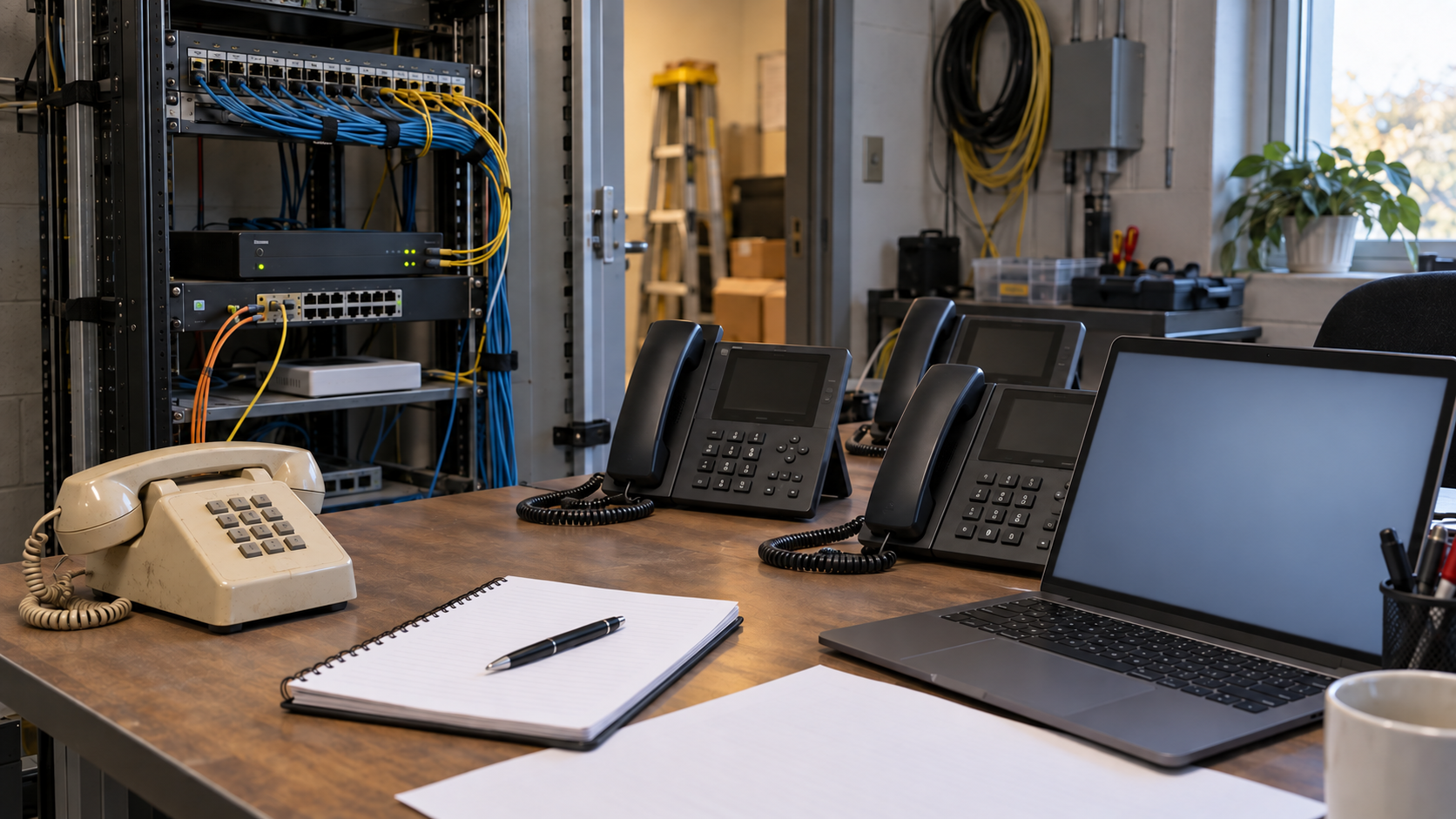
- For businesses, copper retirement can expose undocumented dependencies because POTS lines are still used for alarms, fax, elevators, payment terminals, gate phones, out-of-band access, backup voice and emergency procedures.
- A prior AT&T California copper-retirement debate kept landline migration in the public eye. The Verizon filing extends the buyer lesson across a broader multi-state footprint.
Why this is trending
- Copper retirement is shifting from an abstract telecom modernization plan into dated notices and federal discontinuance filings.
- Businesses often discover old analog dependencies late because the lines were installed by facilities, security, finance or a former IT provider rather than the current phone owner.
- VoIP replacement is not just a number port. Emergency calling, power, location, device compatibility and operational fallback can all change.
- The multi-state scope makes the issue relevant to distributed operators with branches, clinics, retail sites, warehouses and remote offices.
- A missed POTS dependency can become a safety, compliance, customer-service or outage problem after the carrier cutoff rather than during a planned migration.
The VoIP Stack Index take
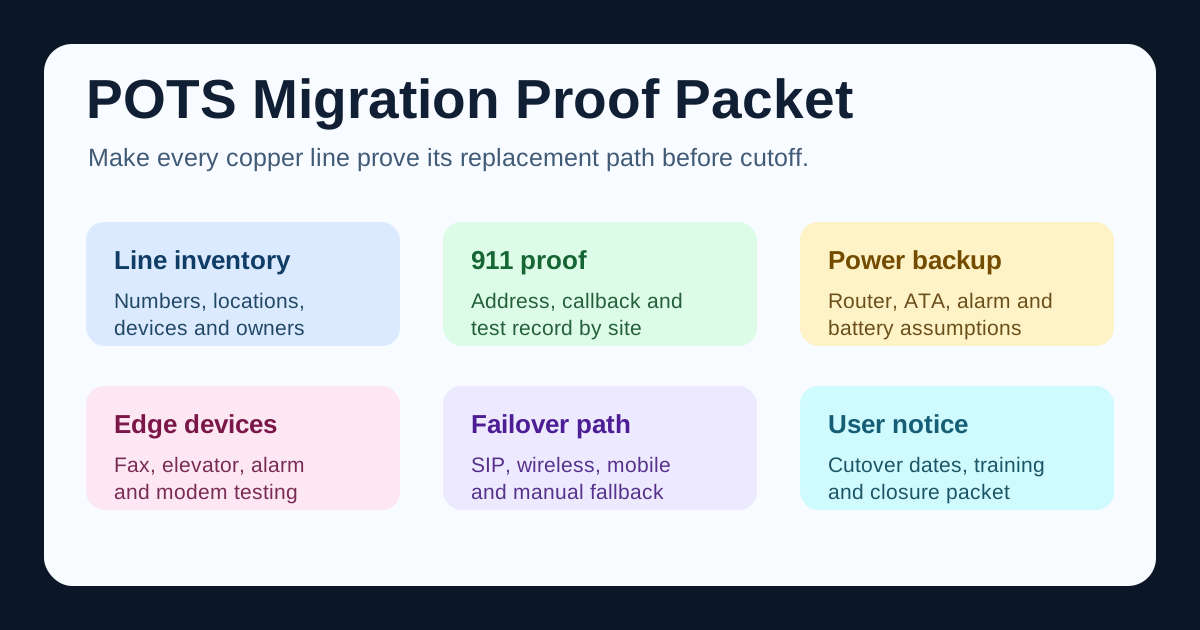
A VoIP buyer should not accept a copper-retirement plan that says only 'move to VoIP.' Ask for a POTS Migration Proof Packet that lists every legacy line, maps the device or workflow attached to it, proves 911 and callback records, tests alarms and fax behavior, names power-backup assumptions, defines failover, documents user notices and stores closure evidence. The goal is to make the replacement path visible before the old line disappears.
POTS Migration Proof Packet
A VoIP buyer framework for validating line inventory, emergency calling, power backup, alarm and fax behavior, failover, user notices, cutover ownership and post-migration closure proof.
What buyers should do next
Pull carrier bills, port records, PBX exports and site inventories to build a line list before any copper-retirement deadline.
Walk each site and match analog lines to alarms, fax, elevators, modems, gate phones, POS terminals, backup voice and out-of-band access.
Validate 911 records and callback numbers for every replacement voice path.
Test power-loss behavior for routers, switches, ATAs, internet links, alarm panels and backup phones.
Keep a closure packet with test results, port confirmations, user notices, exceptions, rollback decisions and retired-line evidence.
Buyer bridge
Do the routing audit before buying the buzz.
The winning AI phone stack is the one that preserves context, controls fallback, and lets humans take over without making the customer repeat the story.
Run the AI-ready VoIP audit