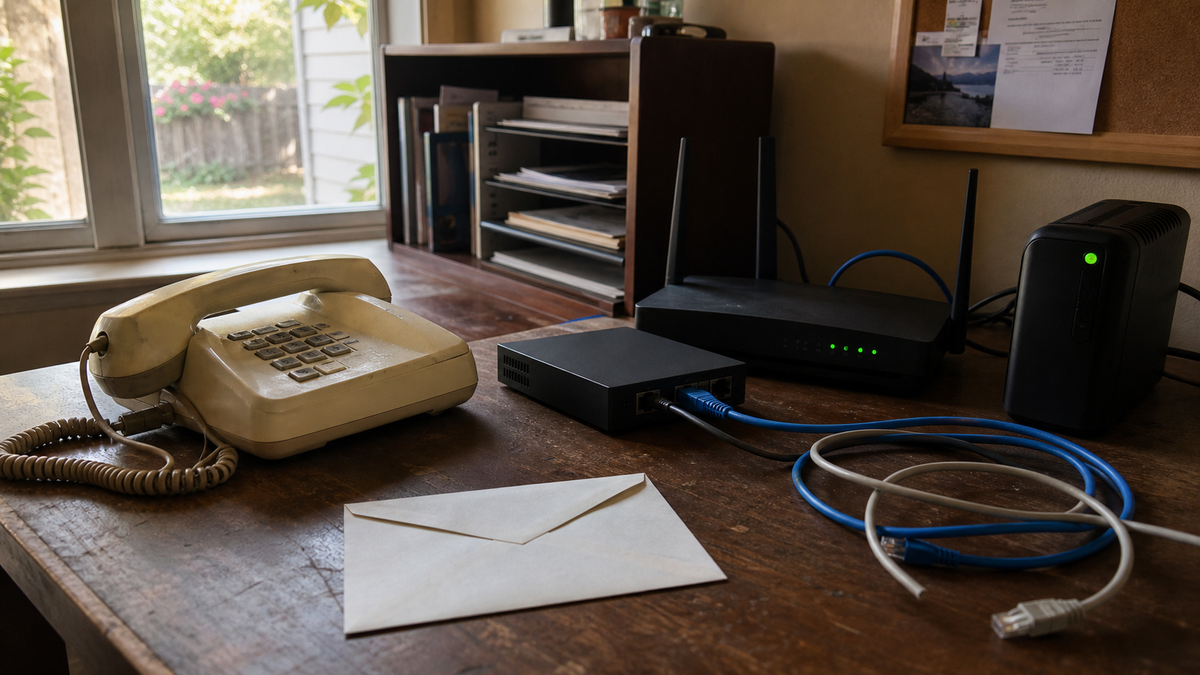
Direct answer
AT&T California landline discontinue June 2027 FCC comments: what buyers need to know
AT&T is seeking federal approval to discontinue legacy copper-based voice services in portions of 360 California wire centers, with CPUC materials saying AT&T claims the applications affect about 184,000 residential customers and 15,000 business customers on or after June 1, 2027. CBS Sacramento reported renewed backlash after Nevada County customers received letters saying home phone service would be discontinued next year. VoIP buyers should treat this as a migration-proof event, not just a carrier-policy fight.
This brief cites the source announcement and translates the event into a buyer framework. Verify current vendor terms before changing phone, messaging, or AI routing.
What happened
- The CPUC says AT&T filed federal discontinuance applications covering legacy copper-based residential and business telephone service in portions of 360 California wire centers.
- The CPUC page says AT&T claims the affected wire centers cover approximately 184,000 residential customers and 15,000 business customers, with proposed discontinuance on or after June 1, 2027.
- CBS Sacramento reported renewed backlash in Northern California after AT&T letters told Nevada County customers that home phone lines would be discontinued next year.
- CBS reported that AT&T is seeking FCC approval and that the FCC comment period for objections runs through July 17.
- AT&T says it plans to exit copper in the majority of its wireline footprint by the end of 2029 and move customers to options such as AT&T Phone - Advanced, wireless, fiber, and Internet Air.
Why this is trending
- Legacy landline retirement is no longer an abstract telecom modernization topic; customers and businesses are receiving migration notices.
- The story ties VoIP replacement to practical continuity concerns: number retention, emergency calling, power loss, rural coverage, alarms, fax, elevators, and medical monitoring.
- The July 17 FCC comment window keeps the California case current for telecom buyers, regulators, local officials, and businesses with copper-dependent workflows.
The VoIP Stack Index take
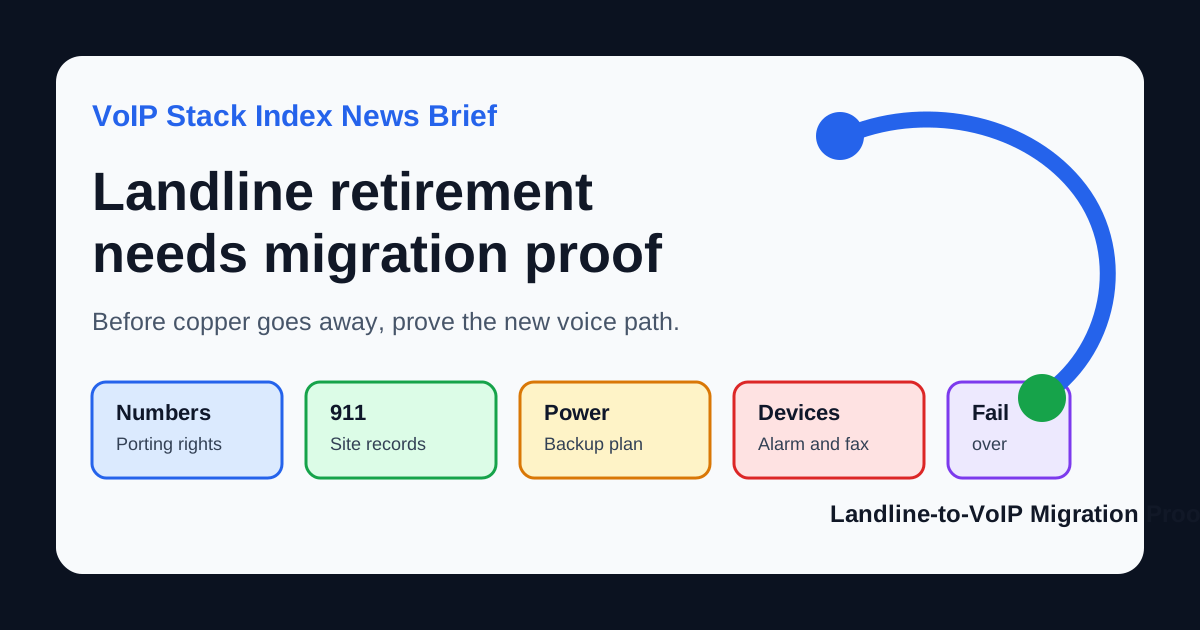
A business should not migrate from copper voice to VoIP or wireless replacement only because a carrier notice says newer options exist. The buyer needs proof that critical call paths, phone numbers, 911, alarm lines, fax devices, modem-dependent equipment, power backup, and failover work before the old line is retired.
Landline-to-VoIP Migration Proof Map
A buyer framework for validating number retention, 911, power backup, alarm and fax compatibility, porting rights, call quality, and failover before replacing legacy copper voice service.
What buyers should do next
Build a line inventory before any copper, landline, PBX, or VoIP replacement decision.
Mark every number by workflow: customer calls, emergency, alarm, fax, elevator, gate, payment, medical device, office phone, or backup line.
Ask providers for porting rights, E911 proof, power-loss behavior, broadband requirements, failover routing, and device-compatibility tests.
Run a staged cutover with test calls, device checks, alarm verification, and a rollback window before disconnecting legacy service.
Buyer bridge
Do the routing audit before buying the buzz.
The winning AI phone stack is the one that preserves context, controls fallback, and lets humans take over without making the customer repeat the story.
Run the AI-ready VoIP audit