
Direct answer
Zoom CVE-2026-53412 Windows account takeover VoIP patch proof: what buyers need to know
Zoom's current ZSB-26014 bulletin says CVE-2026-53412 affects Zoom Workplace for Windows before 7.0.0 and Zoom Workplace VDI Client for Windows before 7.0.10, 6.6.15, and 6.5.18. Zoom rates the improper-input-validation issue critical with CVSS 9.8 and says it may allow an unauthenticated user to conduct account takeover via network access. VoIP buyers should treat the patch as a phone-operations proof issue, not only a desktop update: validate who has the client, which versions are installed, how updates land, what call paths depend on the client, and who owns exceptions.
This brief cites the source announcement and translates the event into a buyer framework. Verify current vendor terms before changing phone, messaging, or AI routing.
What happened
- Zoom published ZSB-26014 for CVE-2026-53412 on July 14, 2026 and updated the bulletin on July 15, 2026.
- Zoom's current bulletin lists Zoom Workplace for Windows before 7.0.0 and Zoom Workplace VDI Client for Windows before 7.0.10, 6.6.15, and 6.5.18 as affected.
- Zoom says improper input validation may allow an unauthenticated user to conduct account takeover via network access.
- BleepingComputer covered the issue on July 15, 2026 as a critical account-takeover vulnerability.
- The Hacker News and NVD separately tracked CVE-2026-53412, reinforcing that buyers should move quickly while using Zoom's current bulletin as the authority for affected products.
Why this is trending
- A CVSS 9.8 collaboration-client flaw crosses the line from routine software hygiene into board-visible endpoint and communications risk.
- Zoom Workplace is often part of the same operating surface as business calling, meetings, messaging, hybrid work, helpdesk escalation, and contact-center collaboration.
- The revised bulletin trail makes the story especially relevant to buyers because affected-product proof, not headline scanning, decides whether a fleet is actually remediated.
The VoIP Stack Index take
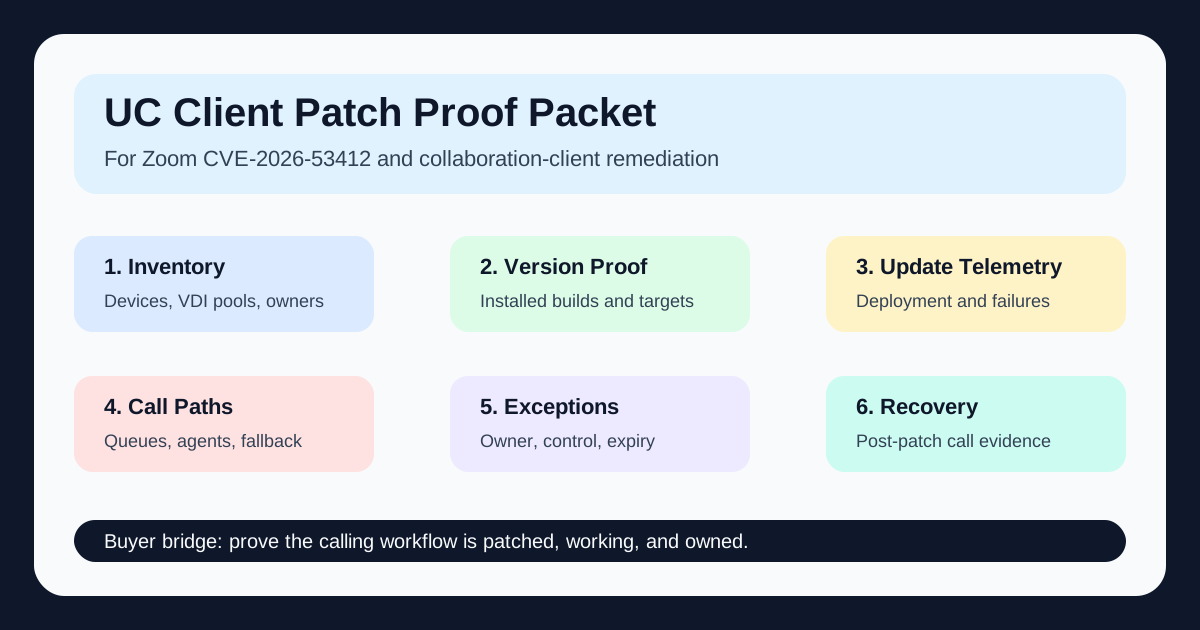
A VoIP buyer should not accept a generic 'Zoom is patched' statement. The buyer needs a UC Client Patch Proof Packet: endpoint inventory, installed-version evidence, update telemetry, call-path dependency map, exception owner, and rollback/recovery evidence that shows calling workflows keep working while vulnerable clients are removed.
UC Client Patch Proof Packet
A buyer framework for proving collaboration-client patch readiness across endpoint inventory, version evidence, update telemetry, call-path exposure, exception ownership, and recovery controls.
What buyers should do next
Pull a current endpoint inventory for Zoom Workplace for Windows and Zoom Workplace VDI Client for Windows.
Compare installed versions with Zoom's current ZSB-26014 fixed-version guidance.
Segment users whose Zoom clients support customer calls, contact-center handoff, emergency escalation, or remote-agent work.
Assign every update failure or legacy branch to a business owner with a deadline and compensating control.
Capture post-patch call, meeting, VDI, and recording tests before closing the remediation ticket.
Buyer bridge
Do the routing audit before buying the buzz.
The winning AI phone stack is the one that preserves context, controls fallback, and lets humans take over without making the customer repeat the story.
Run the AI-ready VoIP audit