Direct answer
Zoom AI receptionist existing phone system VoIP migration proof: what buyers need to know
Zoom announced on July 9, 2026 that Zoom Virtual Agent Receptionist is available as a standalone product for organizations that want an AI front desk without moving to Zoom Phone. Zoom said the receptionist can work with an existing phone system, answer and route calls, book appointments, transcribe calls, and support 10-plus languages. VoIP buyers should treat the launch as a migration-proof trigger: validate the exact call path, transfer context, human fallback, usage pricing, and evidence exports before assuming an AI receptionist can sit cleanly on top of the current phone stack.
This brief cites the source announcement and translates the event into a buyer framework. Verify current vendor terms before changing phone, messaging, or AI routing.
What happened
- Zoom announced the standalone Zoom Virtual Agent Receptionist on July 9, 2026.
- The announcement says organizations can use the receptionist with an existing phone system and do not need to use Zoom Phone.
- Zoom positioned the tool for answering calls, routing callers, transcribing conversations, booking appointments, and supporting more than 10 languages.
- CX Today independently covered the standalone launch and emphasized that the product is no longer limited to Zoom Phone customers.
- No Jitter also covered the move as part of the expanding market for AI receptionists.
Why this is trending
- AI receptionist demand is moving from novelty demos into front-door phone workflows where missed calls, bad transfers, and unclear fallback create immediate revenue risk.
- The standalone positioning makes the story bigger than a Zoom Phone add-on because buyers with other PBX, UCaaS, SIP trunking, or contact-center stacks may now consider overlay deployment.
- Vendor claims about working with an existing phone system can hide practical gaps around number routing, transfer context, emergency paths, compliance, call records, and human handoff.
The VoIP Stack Index take
A VoIP buyer should not treat compatibility as proven because an AI receptionist says it works with any phone system. The buyer needs an AI Receptionist Migration Proof Map: existing call-path diagram, number and queue routing test, transfer-context evidence, fallback owner, after-hours behavior, usage-cost model, and exported call evidence from real pilot calls.
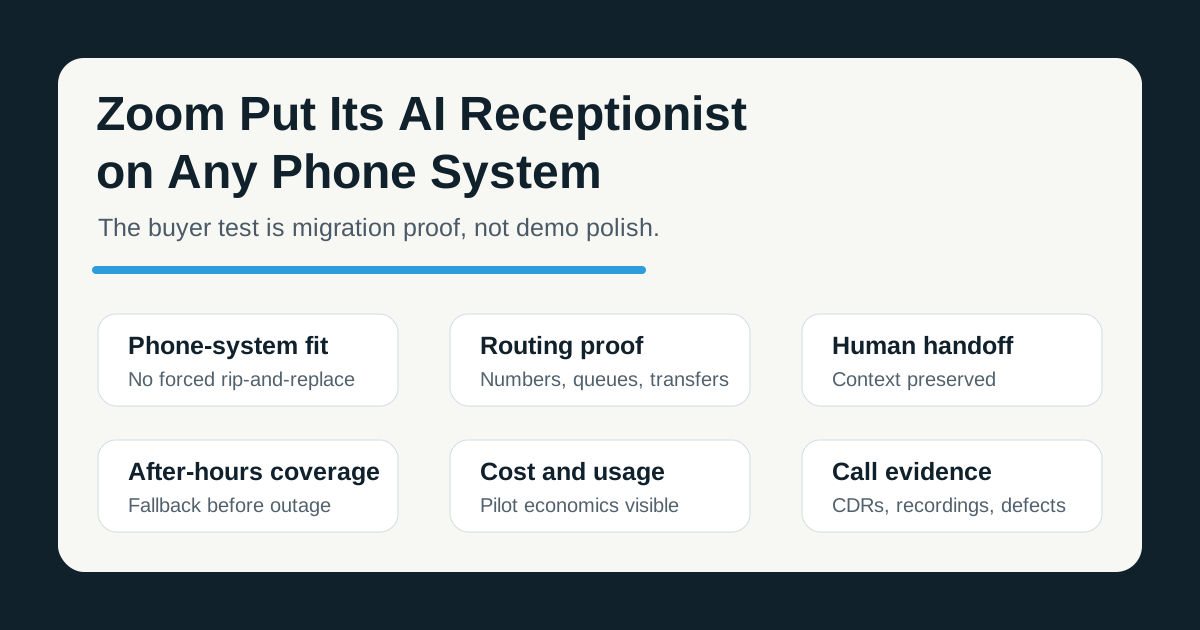
AI Receptionist Migration Proof Map
A buyer framework for validating AI receptionist rollouts across existing phone-system fit, number routing, human handoff, after-hours coverage, usage cost, and call evidence.
What buyers should do next
Draw the current phone-system call path before adding an AI receptionist overlay.
Pick a pilot number with enough real calls to test intent handling, transfers, appointment booking, voicemail, and fallback.
Run test calls for sales, support, billing, urgent requests, wrong numbers, angry callers, and after-hours scenarios.
Compare AI usage cost with retained human coverage, missed-call value, and avoided migration cost.
Require call evidence exports before rolling the receptionist across every public number.
Buyer bridge
Do the routing audit before buying the buzz.
The winning AI phone stack is the one that preserves context, controls fallback, and lets humans take over without making the customer repeat the story.
Run the AI-ready VoIP audit