
Direct answer
Twilio Core Communications voice call failures route proof packet: what buyers need to know
Twilio's public status page said customers may experience voice call failures from Twilio Phone Numbers to Core Communications network subscribers in the United States, with incident updates starting July 27, 2026 and remaining in identified/update status across multiple days. VoIP buyers should treat the event as a route-proof test: require evidence for affected number pools, destination-carrier reachability, alternate routes, failover numbers, synthetic proof calls, customer notices, and recovery reporting.
This brief cites the source announcement and translates the event into a buyer framework. Verify current vendor terms before changing phone, messaging, or AI routing.
What happened
- Twilio's status page listed voice call failures from Twilio Phone Numbers to Core Communications network subscribers in the United States.
- The official updates began with an investigating notice on July 27, 2026 and then moved to identified updates as Twilio said its team had found the cause and was working to resolve it.
- The wording narrowed the issue to calls from Twilio phone numbers to a specific carrier network subscriber population in the United States.
- IsDown independently mirrored the incident and described it as a Twilio voice incident affecting Core Communications in the United States.
- InternetVitals also listed the Core Communications voice failure in its Twilio service-health outage log.
- The buyer lesson is narrow but important: a phone system can look broadly available while one destination-carrier path still fails for customers.
Why this is trending
- The incident had official status-page momentum, multiple updates, and third-party status mirrors rather than only user reports.
- It affected voice calls, the part of communications stacks where buyers often expect provider redundancy to hide carrier complexity.
- The failure pattern was route-specific, which makes it harder for generic uptime checks to catch unless proof calls target the affected destinations.
- AI receptionists, contact centers, healthcare desks, collections teams, sales callbacks, and after-hours support workflows can all miss revenue or service obligations when one route silently breaks.
The VoIP Stack Index take
A VoIP buyer should not accept uptime at the account level as proof of voice continuity. Ask the provider and internal telecom owner for a Carrier Route Failure Proof Packet showing which number pools and destinations are tested, which alternate carriers can originate or terminate calls, how failover numbers are exposed to customers, what status notices say, and which recovery reports close the incident.
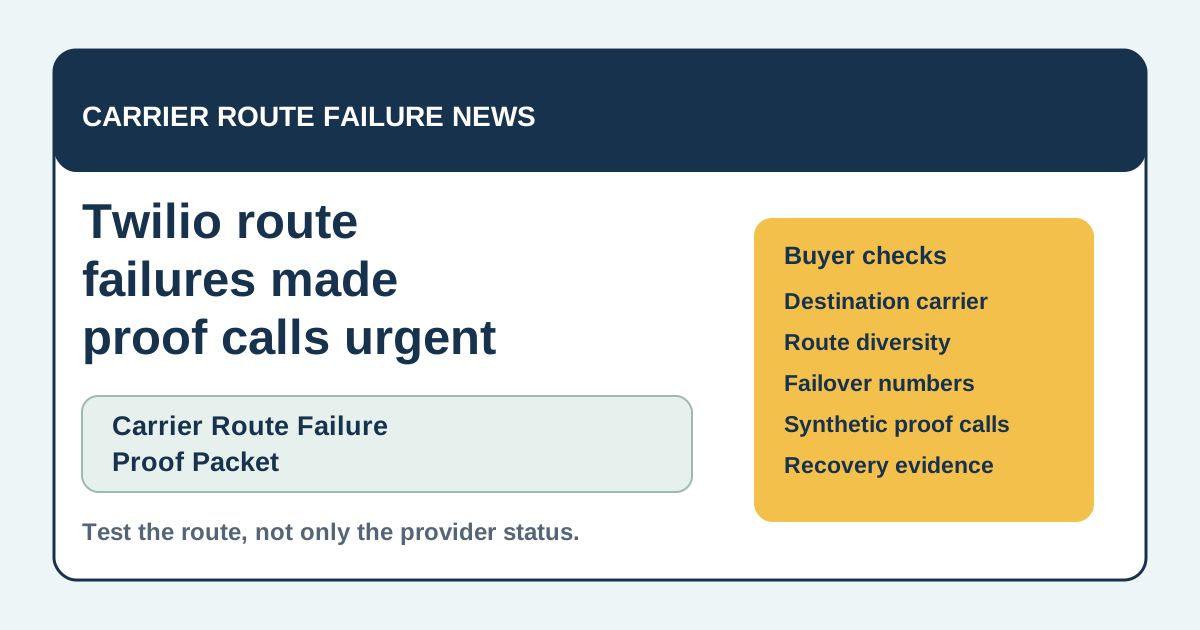
Carrier Route Failure Proof Packet
A VoIP and UCaaS buyer framework for validating destination-carrier incidents across carrier status, affected number pools, route diversity, backup origination, failover numbers, proof calls, customer notices, and recovery evidence.
What buyers should do next
Export recent call-detail records by originating number, destination prefix, carrier, SIP response, queue, and customer segment.
Run proof calls from the affected number pools to representative destinations instead of testing only internal phones.
Confirm whether backup carriers, alternate SIP trunks, app calling, mobile fallback, and failover numbers avoid the same destination path.
Prepare customer-status language that names the route symptom without implying a full provider outage.
Keep a recovery queue for failed callbacks, missed sales calls, regulated contacts, and support escalations.
Use the VoIP Stack Index AI-ready VoIP audit and VoIP cost calculator to convert carrier-route proof into buying requirements.
Buyer bridge
Do the routing audit before buying the buzz.
The winning AI phone stack is the one that preserves context, controls fallback, and lets humans take over without making the customer repeat the story.
Run the AI-ready VoIP audit