
Direct answer
Telstra mobile outage Triple Zero EFTPOS trains July 2026 voice continuity: what buyers need to know
On July 8, 2026, Australian outlets reported a major Telstra mobile outage affecting calls, data, EFTPOS services, train operations, and some Triple Zero emergency-call paths. Telstra's Michael Ackland told The Guardian the company had restored around 90% of services by early afternoon and pointed to a timing-nodes issue. VoIP buyers should treat the event as a voice continuity failover test, not just a carrier headline.
This brief cites the source announcement and translates the event into a buyer framework. Verify current vendor terms before changing phone, messaging, or AI routing.
What happened
- The Guardian's July 8 live coverage reported that Telstra said about 90% of services had been restored after a major mobile outage, while some services were still being recovered.
- The same coverage said the outage affected mobile calls and data and created knock-on problems for EFTPOS, train operations, and emergency-call routing.
- News.com.au reported widespread outage reports across Telstra mobile services and providers using the Telstra network, with disruptions to emergency calls in some regions, EFTPOS, and transport operations.
- Telstra's public outages page remained the official path for customers to check service status by address and service type.
- The operational lesson is that business voice continuity depends on tested alternatives, not only on a primary carrier's uptime history.
Why this is trending
- The story combined consumer calls, business payments, transport disruption, and emergency-call concern in one live outage, which made it move beyond a normal carrier-status page.
- Mobile dependency is now embedded in business voice continuity: staff mobiles, field-service phones, MFA, EFTPOS backup, hotspot fallback, and after-hours escalation can all share the same network exposure.
- Many buyers have backup internet or backup SIP trunks on paper, but they have not tested which numbers, queues, emergency paths, and customer notices work during a carrier incident.
The VoIP Stack Index take
A VoIP buyer should not approve a phone system, mobile fleet, contact center, or field-service voice plan only because the primary carrier is reliable most days. The buyer needs a failover proof packet: carrier dependency map, priority-number list, emergency-call plan, Wi-Fi calling rule, alternate SIM or carrier path, backup SIP route, customer-notice template, test-call evidence, and recovery owner.
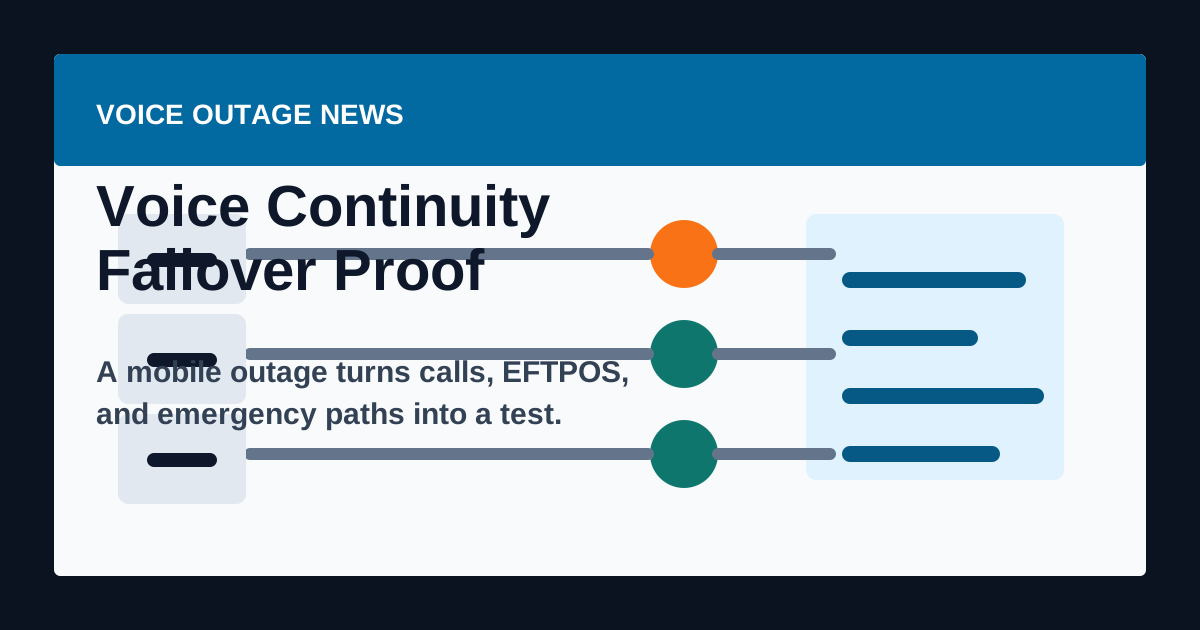
Voice Continuity Failover Proof Packet
A buyer framework for validating voice continuity across carrier dependency, priority numbers, emergency-call handling, Wi-Fi calling, alternate routes, customer notices, and post-incident recovery evidence.
What buyers should do next
List every business phone number, mobile fleet, contact-center queue, SIP trunk, UCaaS path, field-service phone, and after-hours escalation path that depends on one carrier.
Mark the numbers that support revenue, safety, emergency instructions, dispatch, payments, executive escalation, and customer recovery.
Test Wi-Fi calling, softphone access, alternate SIMs, backup SIP routes, and overflow queues from real devices before the next outage.
Write customer and staff outage notices that explain which channels still work and which workflows are delayed.
After any outage, export missed calls, abandoned queues, callback completion, and customer-impact notes into a recovery report.
Buyer bridge
Do the routing audit before buying the buzz.
The winning AI phone stack is the one that preserves context, controls fallback, and lets humans take over without making the customer repeat the story.
Run the AI-ready VoIP audit