
Direct answer
Telnyx Conversation History beta: what buyers need to know
Telnyx launched Conversation History for Inference calls in beta on June 18, 2026. The feature lets AI agents keep session context, retrieve prior interactions, and expose searchable conversation memory through the Inference API when voice applications opt in with conversation_history_enabled. VoIP buyers should treat it as a prompt to audit memory, retention, privacy, CRM logging, and human handoff before production launch.
This brief cites the source announcement and translates the event into a buyer framework. Verify current vendor terms before changing phone, messaging, or AI routing.
What happened
- Telnyx announced a beta Conversation History feature for Inference calls on June 18, 2026.
- The company says the feature can automatically store and retrieve prior interactions, giving AI agents continuity across sessions instead of treating every call as a blank slate.
- Telnyx says developers can enable the feature on voice applications with the conversation_history_enabled parameter, then create, retrieve, search, list, and update conversations through Inference API endpoints.
- The release notes position the feature for voice agents that need persistent context, personalization, analytics, and more natural follow-up across repeated customer interactions.
Why this is trending
- Voice-agent buyers are moving from demo quality to operating reliability. Memory is one of the hardest pieces because it touches privacy, context, retrieval, and handoff.
- SIP-based voice agents need infrastructure support for call state, transcript history, and transfer context, not just a model that sounds fluent.
- The announcement lands while AI receptionists and phone agents are being evaluated for repeat callers, missed-call recovery, appointment follow-up, and multi-step service requests.
The VoIP Stack Index take
The takeaway is not that every buyer needs Telnyx. The takeaway is that AI-ready VoIP now includes conversation memory. If a caller phones back after a missed call, repeats a service request, or needs escalation, the phone stack must decide what context is retained, who can see it, how long it lives, and how a human receives it.
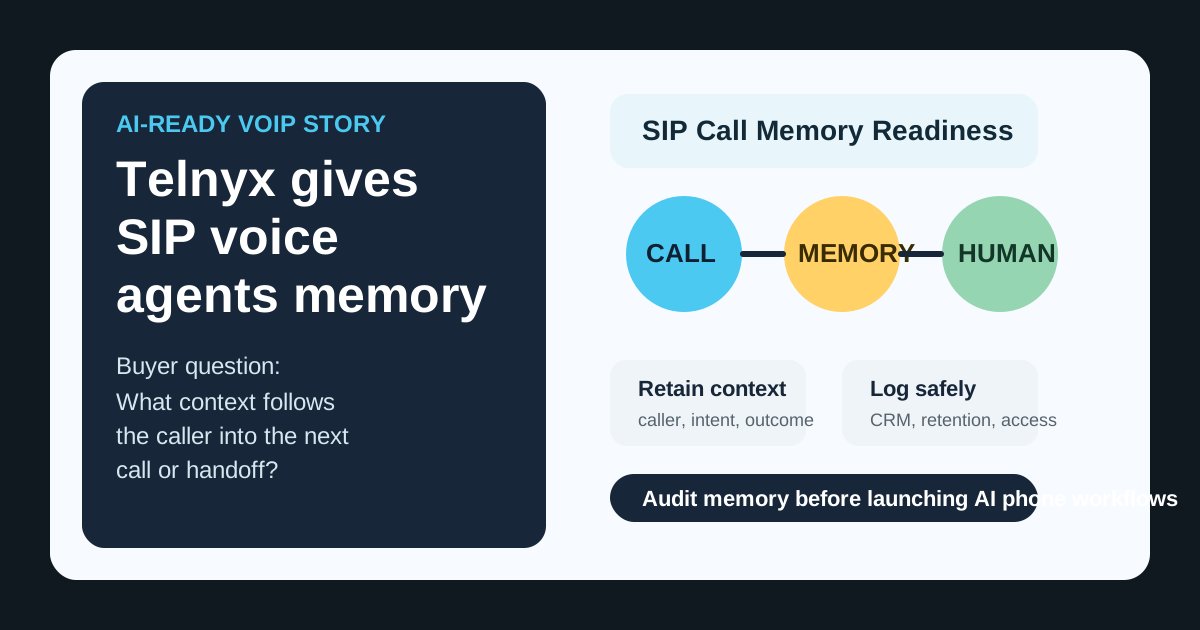
SIP Call Memory Readiness Checklist
A buyer checklist for deciding whether an AI voice stack can preserve conversation context, retrieve prior calls, log outcomes, and hand callers to humans without losing the story.
What buyers should do next
Ask whether the phone stack stores full transcripts, summaries, metadata, or no memory at all.
Define which caller context AI can use and which context requires human review or consent.
Verify retention, deletion, audit logs, CRM writeback, and access permissions before going live.
Run repeat-caller and transfer tests to confirm the human receives enough context to avoid making the customer restart.
Buyer bridge
Do the routing audit before buying the buzz.
The winning AI phone stack is the one that preserves context, controls fallback, and lets humans take over without making the customer repeat the story.
Run the AI-ready VoIP audit