
Direct answer
synthetic robocall traffic provider proof packet: what buyers need to know
Synthetic robocalls are no longer an abstract risk for business-phone buyers. A September 2026 arXiv study found machine-voiced openings in at least 26.9% of scored unwanted inbound calls and automation disclosure in only 0.44%. The FCC also removed 14 Robocall Mitigation Database certifications and told intermediate and voice providers to stop accepting direct traffic from those companies. Buyers should ask providers for evidence across RMD status, upstream traffic controls, STIR/SHAKEN, analytics, synthetic-voice detection, traceback response, blocking policy and customer notice handling.
This brief cites the source announcement and translates the event into a buyer framework. Verify current vendor terms before changing phone, messaging, or AI routing.
What happened
- The September 10, 2026 arXiv paper recorded 10,987 unwanted inbound calls through a honeypot over 66 days and scored 6,192 call openings.
- The researchers found 13.8% of scored openings used replayed recordings and 13.1% used freshly synthesized speech, putting machine-voiced openings at least at 26.9%.
- A second AI-oriented pass labeled 29.3% of scored openings as machine voiced, while only 0.44% of calls disclosed automation.
- The paper found synthetic openings concentrated more in lead-generation spam than fraud and reported that one synthetic voice appeared across nine campaigns.
- On September 2, 2026, the FCC removed the Robocall Mitigation Database certifications of 14 companies and directed other providers to stop accepting direct calls from them within two business days.
- The FCC's RMD expectations include robocall mitigation plans, STIR/SHAKEN status, call analytics, know-your-upstream procedures, traceback commitments and contact accountability.
Why this is trending
- The paper gives buyers a recent measurement-based estimate of how much unwanted traffic is already machine voiced rather than manually dialed.
- Synthetic speech changes the abuse economics because one convincing voice can scale across multiple campaigns, lead-gen scripts and calling paths.
- The FCC action makes robocall mitigation a live provider-governance issue, not only a consumer annoyance or theoretical compliance topic.
- Business VoIP customers increasingly depend on hosted voice, SIP trunks, call centers, number reputation and carrier relationships they cannot inspect directly.
- AI voice platforms, contact centers and lead-generation vendors can all sit near the call path, so buyers need proof that provider controls match the new traffic reality.
The VoIP Stack Index take
A VoIP buyer should not ask only whether the provider blocks robocalls. Ask for a Synthetic Call Traffic Proof Packet that ties upstream carrier status, RMD posture, STIR/SHAKEN, analytics, synthetic-speech signals, traceback process, blocking rules, false-positive review and customer notices to the actual numbers and routes the buyer uses. The point is to see how suspicious traffic is handled before it becomes employee distraction, customer fraud exposure, brand harm or number-reputation damage.
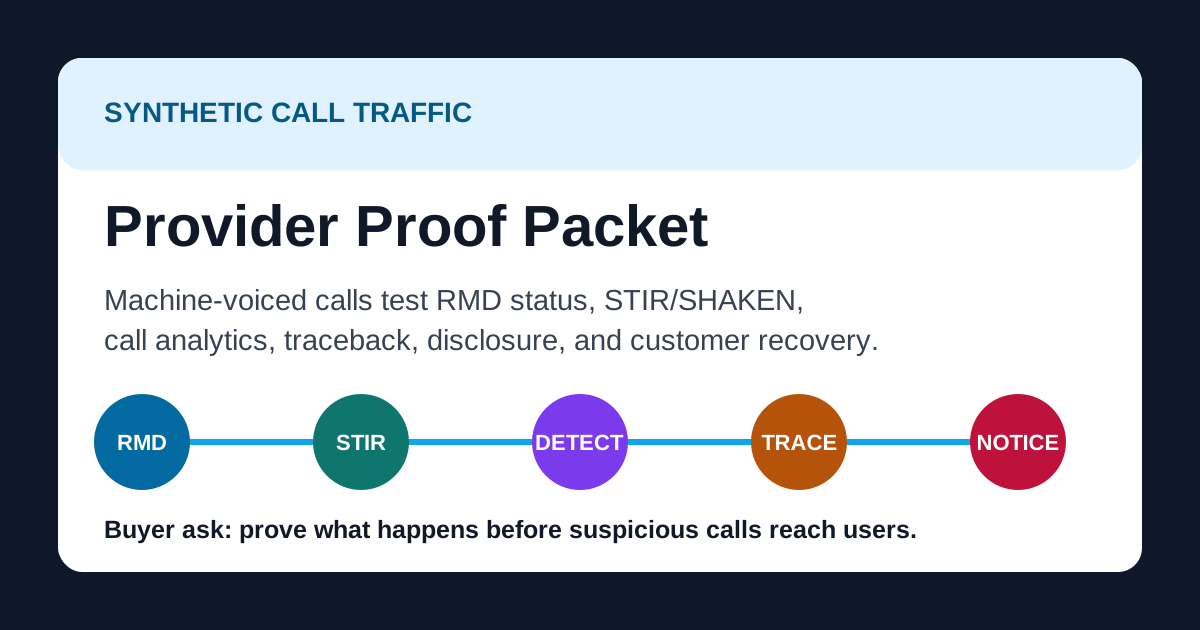
Synthetic Call Traffic Proof Packet
A VoIP buyer framework for validating RMD status, STIR/SHAKEN posture, call analytics, synthetic-voice detection, traceback readiness, blocking rules and user communication.
What buyers should do next
Ask each provider which upstream carriers and direct-traffic partners touch the buyer's production voice routes.
Request current RMD status, STIR/SHAKEN handling and robocall mitigation evidence for the routes that matter.
Collect sample-call evidence for unwanted traffic, including audio classification, SIP metadata, timestamps and affected numbers.
Define when synthetic or replayed voice signals trigger blocking, tagging, human review, traceback or customer notice.
Keep a closure packet with provider replies, traceback evidence, blocked-route decisions, false-positive review and staff guidance.
Buyer bridge
Do the routing audit before buying the buzz.
The winning AI phone stack is the one that preserves context, controls fallback, and lets humans take over without making the customer repeat the story.
Run the AI-ready VoIP audit