
Direct answer
49 attorneys general FCC numbering policies robocalls VoIP provider KYC July 2026: what buyers need to know
NAAG said on July 8, 2026 that a bipartisan coalition of 49 state and territory attorneys general urged the FCC to strengthen rules that would cut scammers' access to legitimate telephone numbers. State AG releases say the coalition is responding to FCC proposed numbering-policy rules and wants stronger controls over how numbers are assigned, resold, tracked, and used. VoIP buyers should turn that into a provider-KYC proof request before trusting a carrier, SIP trunk, CPaaS platform, reseller, or AI-calling stack.
This brief cites the source announcement and translates the event into a buyer framework. Verify current vendor terms before changing phone, messaging, or AI routing.
What happened
- NAAG announced that 49 state and territory attorneys general called on the FCC to strengthen rules aimed at cutting off scammers' access to legitimate telephone numbers.
- New York Attorney General Letitia James said the coalition was responding to FCC proposals released in March 2026 to tighten existing regulations against illegal robocalls.
- Maryland's attorney general said Americans received approximately 29.6 billion scam robocalls and texts last year and lost nearly $2 billion to these scams.
- The FCC's numbering-policy proceeding seeks comment on how assigned numbering resources are utilized, reported, and resold by service providers as part of illegal-robocall prevention.
- The operating issue for buyers is not only robocall compliance. It is whether a provider can prove who gets numbers, why they need them, who resells them, and how abuse is stopped.
Why this is trending
- The story has broad state-level momentum: dozens of attorneys general are treating legitimate-number access as a fraud-control problem.
- Scammers can move from spoofing to legitimate-number acquisition, which makes call trust harder for consumers and harder for businesses trying to preserve real answer rates.
- AI voice, CPaaS, SIP trunks, offshore call centers, lead generators, and resellers can all touch the same number-access chain, so buyers need evidence before bad traffic contaminates their caller reputation.
The VoIP Stack Index take
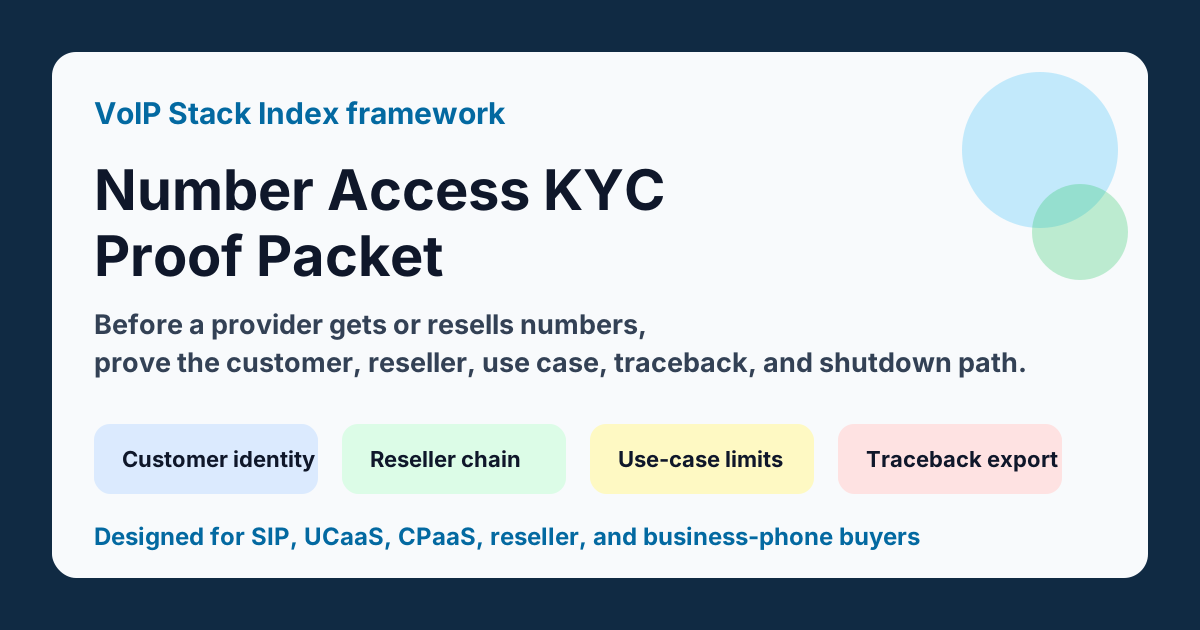
A VoIP buyer should not assume a provider's robocall controls are enough because the provider has a compliance page. The buyer needs a Number Access KYC Proof Packet: customer identity checks, reseller-chain disclosure, assigned-number use case, campaign purpose, caller-name governance, STIR/SHAKEN status, traceback contact, suspension triggers, complaint handling, and exportable evidence after an abuse report.
Number Access KYC Proof Packet
A buyer framework for validating voice providers across customer identity, reseller chain, number-use purpose, assignment controls, traceback exports, and fraud shutdown evidence.
What buyers should do next
Ask each carrier, SIP trunk, CPaaS platform, and reseller for its customer and business-identity checks before number assignment.
Request a reseller-chain map showing who owns the number, who provisions it, and who controls the traffic.
Require use-case documentation for outbound sales, reminders, collections, support, AI calls, and outsourced call-center traffic.
Confirm traceback response contacts, CDR exports, SIP-header evidence, attestation data, and abuse-report SLAs.
Document suspension triggers, fallback routing, and customer notices before a number block is linked to fraud complaints.
Buyer bridge
Do the routing audit before buying the buzz.
The winning AI phone stack is the one that preserves context, controls fallback, and lets humans take over without making the customer repeat the story.
Run the AI-ready VoIP audit