
Direct answer
RingCentral down July 2 2026 status services stabilized Downdetector reports: what buyers need to know
RingCentral disruption reports on July 2, 2026 made cloud phone continuity a buying issue because business phone failures immediately affect inbound calls, queues, callbacks, SMS, fax, and contact-center handoff. RingCentral's status dashboard showed a stabilization update, while outage trackers and community reports recorded user impact. VoIP buyers should require a continuity proof packet before relying on one UCaaS path for every customer call.
This brief cites the source announcement and translates the event into a buyer framework. Verify current vendor terms before changing phone, messaging, or AI routing.
What happened
- DesignTAXI Community reported that RingCentral was down for hundreds of users on July 2, 2026, citing a spike in Downdetector reports around 9:36 AM Eastern Time.
- RingCentral's public status dashboard surfaced a July 2 update saying operations teams had confirmed services were stabilized and would continue monitoring.
- RingCentral's own support guidance points customers to the Service Status site as the place to check whether an account is affected by a current outage.
- StatusGator and IsDown both monitor RingCentral's official status page and user reports, giving buyers a separate way to track incident history and current operational status.
- For VoIP buyers, the useful lesson is not that every provider outage is avoidable. It is that cloud phone designs need tested fallback before the next disruption lands during business hours.
Why this is trending
- UCaaS outages are immediately visible to revenue teams because phones, queues, callbacks, SMS, fax, and contact-center workflows can all depend on the same provider path.
- Crowdsourced outage reports often move faster than internal incident review, so operations teams need a way to reconcile user complaints with official status updates.
- Many buyers treat a cloud phone migration as the end of resilience planning. The July RingCentral reports show why failover, customer communication, and post-incident evidence still belong in the buying checklist.
The VoIP Stack Index take
A VoIP buyer should not approve a cloud phone stack only because the vendor has a status page and a high uptime claim. The buyer needs continuity proof: who watches provider status, which numbers can reroute, what happens to queues and SMS, how emergency calls are handled, how customers are notified, and what evidence is exported after an incident.
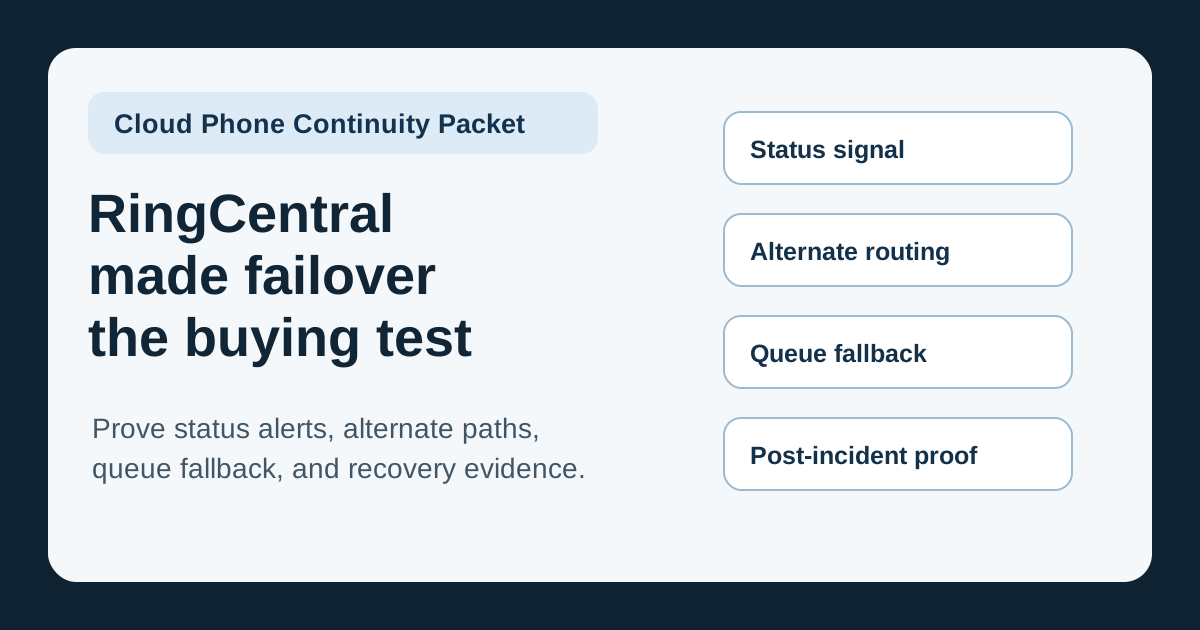
Cloud Phone Continuity Proof Packet
A buyer framework for validating UCaaS continuity across status monitoring, alternate inbound routing, call queues, SMS/customer updates, emergency paths, and post-incident evidence.
What buyers should do next
Subscribe to the provider's official service-status updates and add an independent monitor for the phone platform.
List the numbers, queues, SMS paths, fax paths, contact-center lines, and emergency routes that depend on the same UCaaS provider.
Create a backup route for the highest-value inbound lines and test it before an incident.
Write customer-update templates for phone disruption, callback delay, and alternate contact instructions.
After every incident, export missed calls, queue abandonment, callback delays, SMS failures, repair work, and provider status timestamps.
Buyer bridge
Do the routing audit before buying the buzz.
The winning AI phone stack is the one that preserves context, controls fallback, and lets humans take over without making the customer repeat the story.
Run the AI-ready VoIP audit