
Direct answer
Microsoft Teams version detection incident meetings calls continuity proof packet: what buyers need to know
A Microsoft 365 incident mirrored by the University of Pennsylvania says some users on newer Teams versions could not create or join meetings or calls from July 27 to July 31, 2026 because the service incorrectly detected those clients as old. The incident was mitigated by July 31 at 18:40 UTC. VoIP buyers should treat the event as a collaboration-call continuity test: require proof for client-version gates, browser fallback, PSTN dial-in, alternate meeting paths, status communications, admin guidance, and recovery evidence.
This brief cites the source announcement and translates the event into a buyer framework. Verify current vendor terms before changing phone, messaging, or AI routing.
What happened
- The Microsoft 365 incident mirror said the issue began July 27, 2026 at 12:30 UTC and reached final status on July 31 at 18:40 UTC.
- The incident said some users on newer Microsoft Teams versions could not create or join meetings or calls.
- The stated root behavior was that the service incorrectly detected affected Teams clients as old and restricted meeting and call actions.
- The final update said Microsoft mitigation completed and telemetry confirmed no further impact.
- Status aggregators such as StatusGator and IsDown did not show a broad active Teams outage after mitigation.
- That makes the buyer lesson narrower than a full cloud outage: a client or policy gate can still interrupt collaboration calling for affected users.
Why this is trending
- The incident touched meetings and calls, which are core business voice workflows even when Teams is not the primary phone system.
- It lasted across several days from initial impact to final mitigation, making it more than a transient blip for affected organizations.
- The root pattern was subtle: newer clients were treated as outdated. That is the kind of failure normal uptime checks can miss.
- Buyers increasingly depend on collaboration apps for customer calls, sales demos, support escalations, internal war rooms, and incident command.
The VoIP Stack Index take
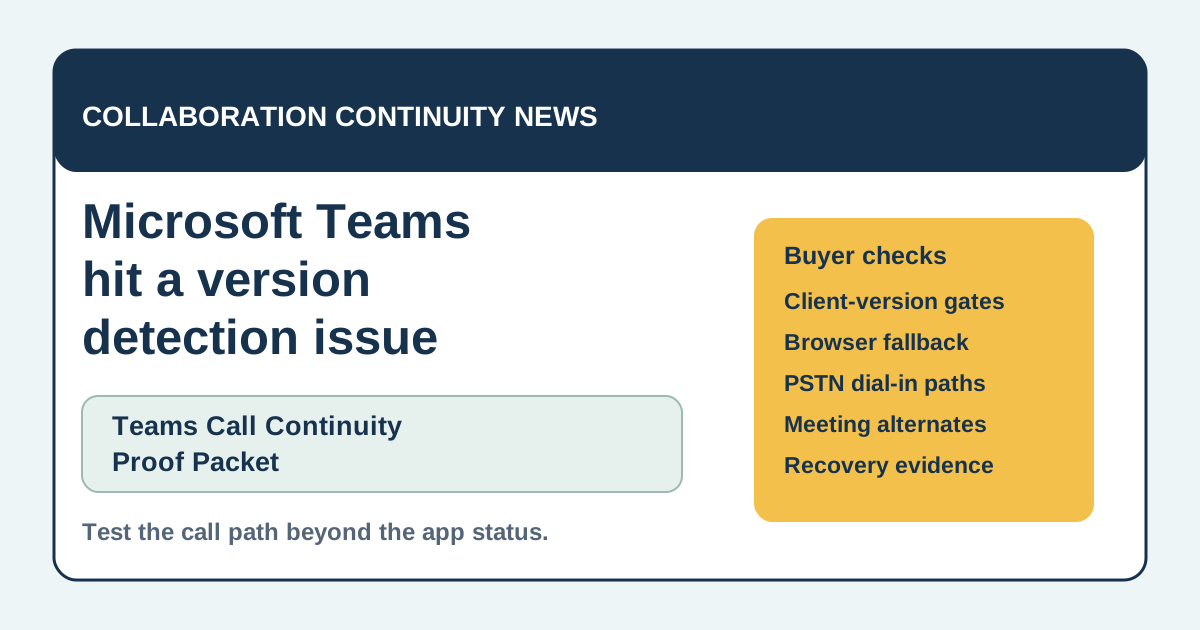
A VoIP buyer should not assume collaboration calling is covered because a platform status page is green. Ask the provider and internal telecom owner for a Teams Call Continuity Proof Packet showing which users can bypass a client gate, how browser and mobile access is tested, whether PSTN dial-in works, which alternate meeting path is approved, who sends customer notices, and what evidence closes the incident.
Teams Call Continuity Proof Packet
A VoIP and UCaaS buyer framework for validating collaboration calling when client-version detection, update policy, browser access, PSTN fallback, meeting alternatives, customer notices, and recovery evidence matter.
What buyers should do next
Inventory every customer-facing workflow that uses Teams meetings, Teams Phone, dial-in conferencing, browser join, mobile join, or calendar-created meetings.
Export endpoint versions and update rings so affected users can be isolated quickly when client gating fails.
Test browser Teams, mobile Teams, PSTN dial-in, desk phones, alternate conferencing, and SIP routes with real audio before an incident.
Write customer-notice templates that explain meeting alternatives without overpromising root cause.
Keep a failed-join and missed-call recovery queue for account teams and support supervisors.
Use the VoIP Stack Index AI-ready VoIP audit and VoIP cost calculator to convert collaboration-call continuity into buying requirements.
Buyer bridge
Do the routing audit before buying the buzz.
The winning AI phone stack is the one that preserves context, controls fallback, and lets humans take over without making the customer repeat the story.
Run the AI-ready VoIP audit