Direct answer
Hurricane Lowell communications voice continuity proof: what buyers need to know
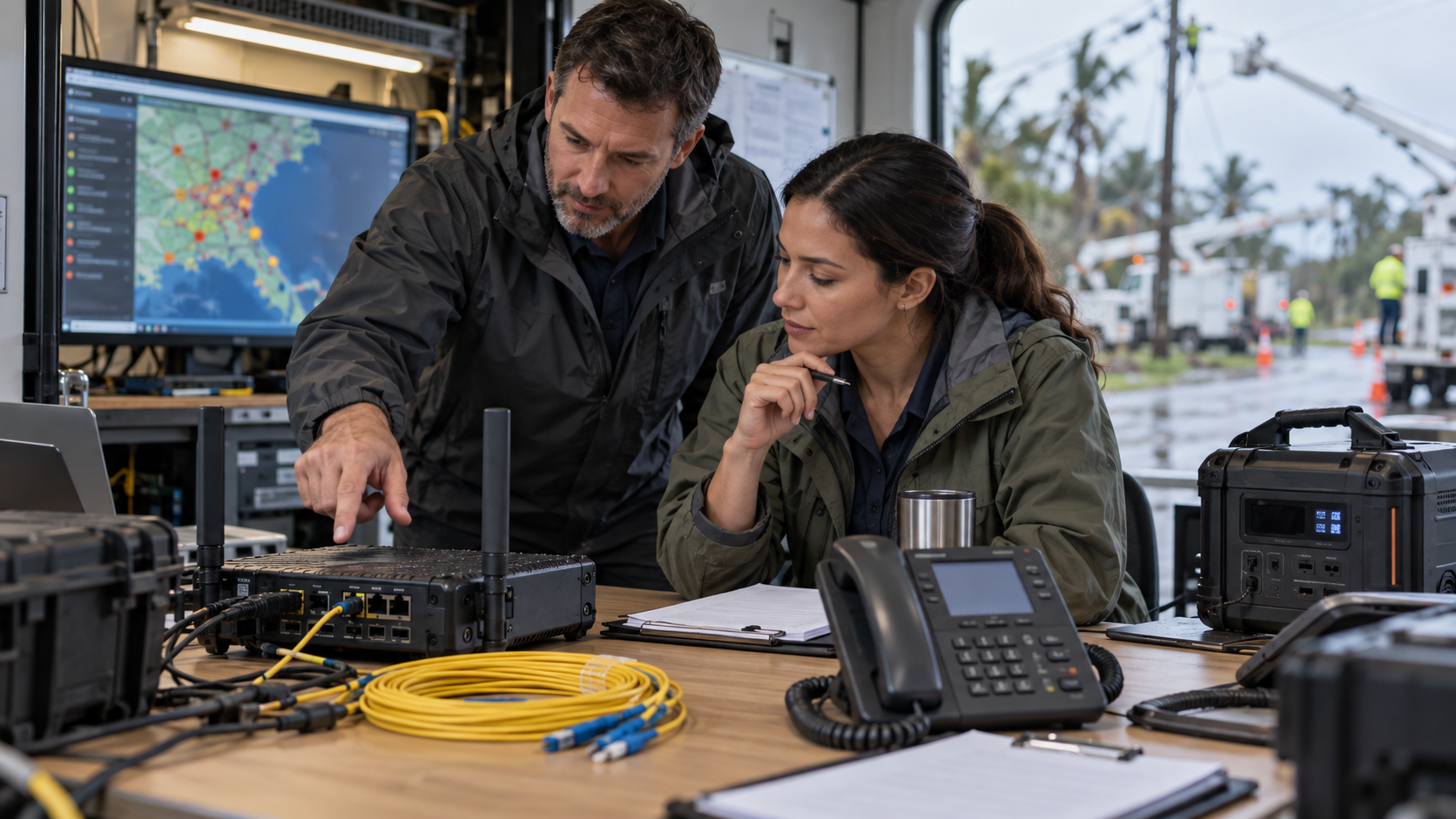
Hurricane Lowell is a voice-continuity proof event for business-phone buyers. The FCC's daily communications status reporting and DIRS/MDRI activation show why continuity cannot stop at a UCaaS status page. Buyers should ask providers for evidence across carrier service status, local power, backhaul transport, SIP and PSTN failover, E911 assumptions, monitoring alerts, user instructions and post-event closure.
This brief cites the source announcement and translates the event into a buyer framework. Verify current vendor terms before changing phone, messaging, or AI routing.
What happened
- The FCC published a Hurricane Lowell communications status report for September 11, 2026 and had activated DIRS and the Mandatory Disaster Response Initiative for affected Hawaii areas two days earlier.
- NOAA said Lowell passed west of Hawaii on September 8 as a Category 2 hurricane, bringing damaging winds, heavy rain, hazardous surf and a power outage that affected nearly 90% of Kauai.
- National Weather Service Honolulu listed preliminary Lowell wind gusts including 92 mph at Puu Lua, 85 mph at Waimea and 84 mph at Lihue Airport.
- Civil Beat reported September 11 that radio service failures exposed gaps in emergency planning, including station generator and equipment readiness.
- A September 10 arXiv paper studying Hurricane Helene found that cell-site damage was a small share of attributed outage days, while power and transport were dominant outage causes in many affected areas.
- The Helene paper's buyer lesson generalizes to storm planning: backup power is necessary, but the backhaul and transport path still need proof.
Why this is trending
- Lowell created a fresh Hawaii communications-recovery story with power, wireless, wireline, radio and public-safety implications.
- The FCC's DIRS and MDRI framework makes outage reporting and carrier recovery visible instead of treating telecom resilience as an invisible vendor promise.
- Business voice buyers increasingly rely on IP voice, UCaaS, mobile apps, SIP trunks, branch internet, managed routers and emergency-calling location systems that fail in different ways.
- The Helene research reinforces that towers standing upright does not prove service continuity when power and transport are the failure points.
- Customer-facing teams need plain-language instructions before a storm, during an outage and after service restoration, especially when normal desk phones, apps or internet paths degrade.
The VoIP Stack Index take
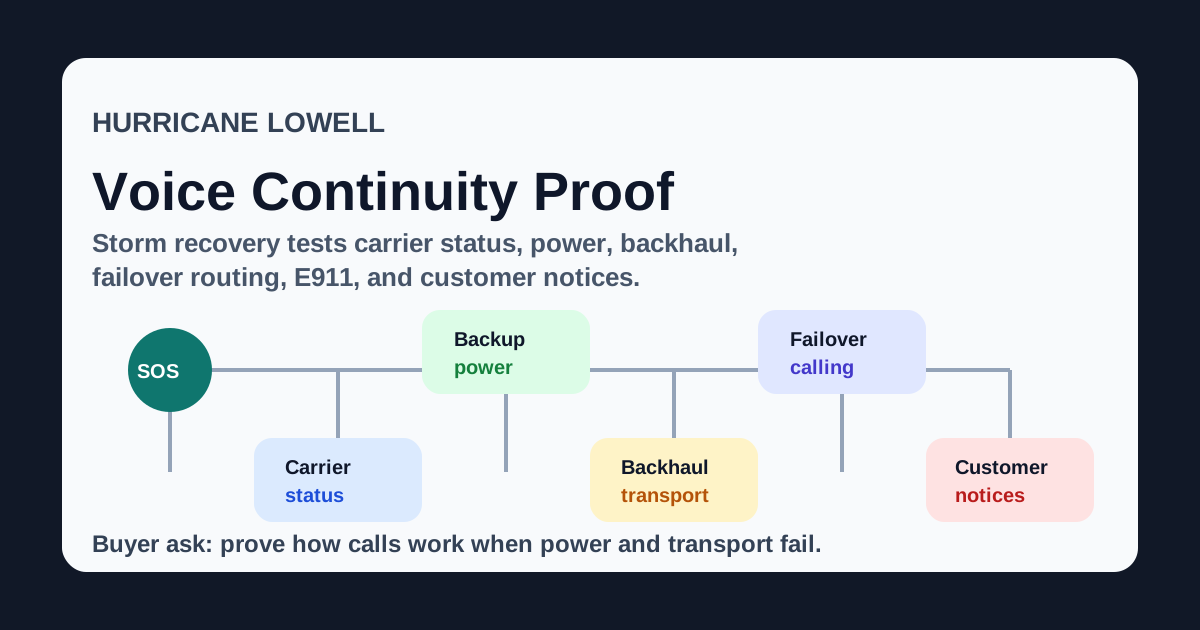
A VoIP buyer should ask for a Voice Continuity Proof Map before storm season, not during a carrier outage. The map should tie each calling path to power dependency, transport dependency, carrier owner, fallback route, E911 assumption, monitoring signal, communication template and closure evidence. The point is not to demand impossible uptime; it is to know what changes when the normal voice path loses power, backhaul or last-mile access.
Voice Continuity Proof Map
A VoIP buyer framework for validating communications continuity across carrier reports, backup power, backhaul, failover, emergency calling, monitoring and customer notices.
What buyers should do next
Ask providers which services, numbers, trunks, sites and remote-user paths would appear in a storm continuity map.
Document backup power and transport dependencies for phones, routers, modems, SBCs, contact-center tools and UCaaS apps.
Run approved pre-season failover checks for representative inbound calls, outbound calls, voicemail, forwarding and softphones.
Confirm E911 location and callback assumptions for offices, hybrid users, mobile apps and emergency fallback paths.
Keep a post-event closure packet with tickets, status reports, call tests, customer notices and unresolved exceptions.
Buyer bridge
Do the routing audit before buying the buzz.
The winning AI phone stack is the one that preserves context, controls fallback, and lets humans take over without making the customer repeat the story.
Run the AI-ready VoIP audit