Direct answer
CVE-2026-0826 HP Poly VVX Trio VoIP phones remote code execution CVSS 9.2: what buyers need to know
CVE-2026-0826 is a critical HP Poly Voice vulnerability with a CVSS 4.0 score of 9.2. NVD says a buffer overflow can enable remote code execution on affected Poly Voice products on Linux in certain scenarios when Interactive Connectivity Establishment, or ICE, is enabled. Rapid7 says the issue can allow unauthenticated RCE with root privileges on affected VVX and Trio models, and HP published fixed firmware. VoIP buyers should treat the advisory as a phone-fleet security proof test.
This brief cites the source announcement and translates the event into a buyer framework. Verify current vendor terms before changing phone, messaging, or AI routing.
What happened
- NVD lists CVE-2026-0826 as a Poly Voice buffer overflow that can enable remote code execution when ICE is enabled in certain scenarios.
- NVD attributes the CVE source to HP Inc., shows a CNA CVSS 4.0 score of 9.2 Critical, and references HP's security bulletin HPSBPY04083.
- Rapid7 published technical research on June 1, 2026 describing unauthenticated remote code execution with root privileges against affected Poly VVX and Trio devices.
- Rapid7 said the vulnerability affects VVX 150, 250, 350, and 450 models plus Trio 8300, 8500, and 8800 models, while also noting that ICE is not enabled by default.
- Security coverage from Check Point and SecurityAffairs amplified the enterprise risk: desk phones can become footholds if fleets are exposed, unpatched, or poorly inventoried.
Why this is trending
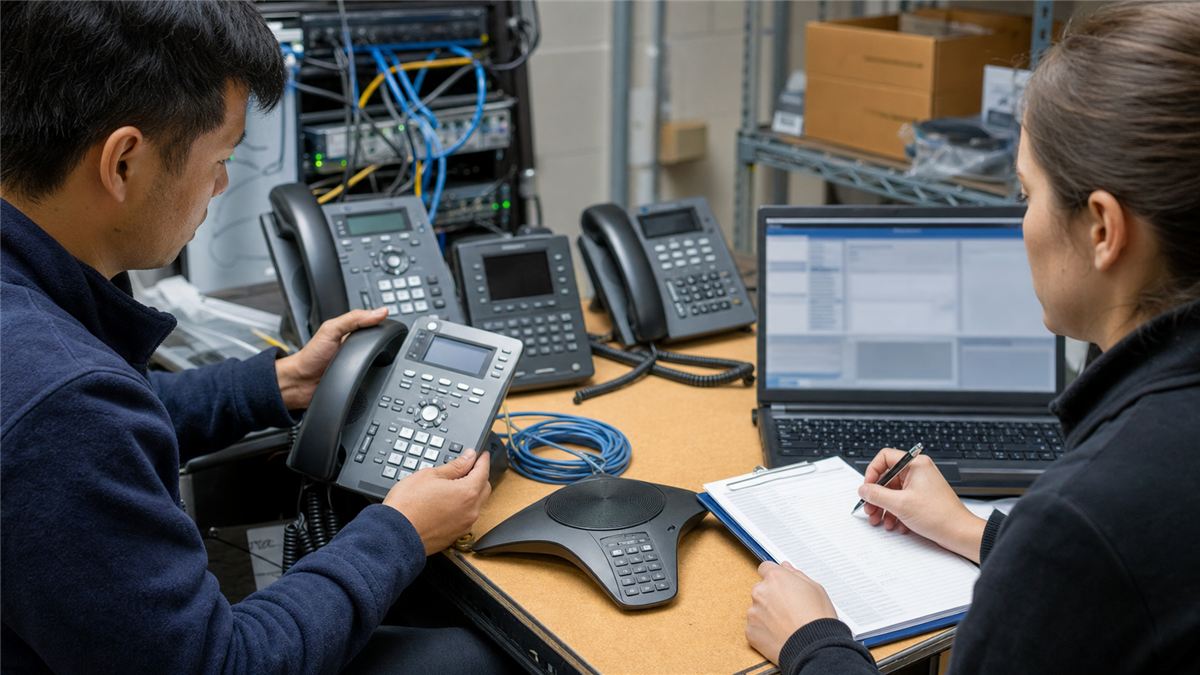
- Desk phones are often treated as office hardware, but many are networked Linux systems with SIP, firmware, configuration, and management-plane risk.
- The Rapid7 write-up included technical detail and exploit demonstration context, which moved the story from ordinary patch notice to enterprise exposure question.
- VoIP buyers are already replacing, consolidating, or cloud-migrating phone systems; a critical device CVE forces inventory and patch evidence into the purchasing checklist.
The VoIP Stack Index take
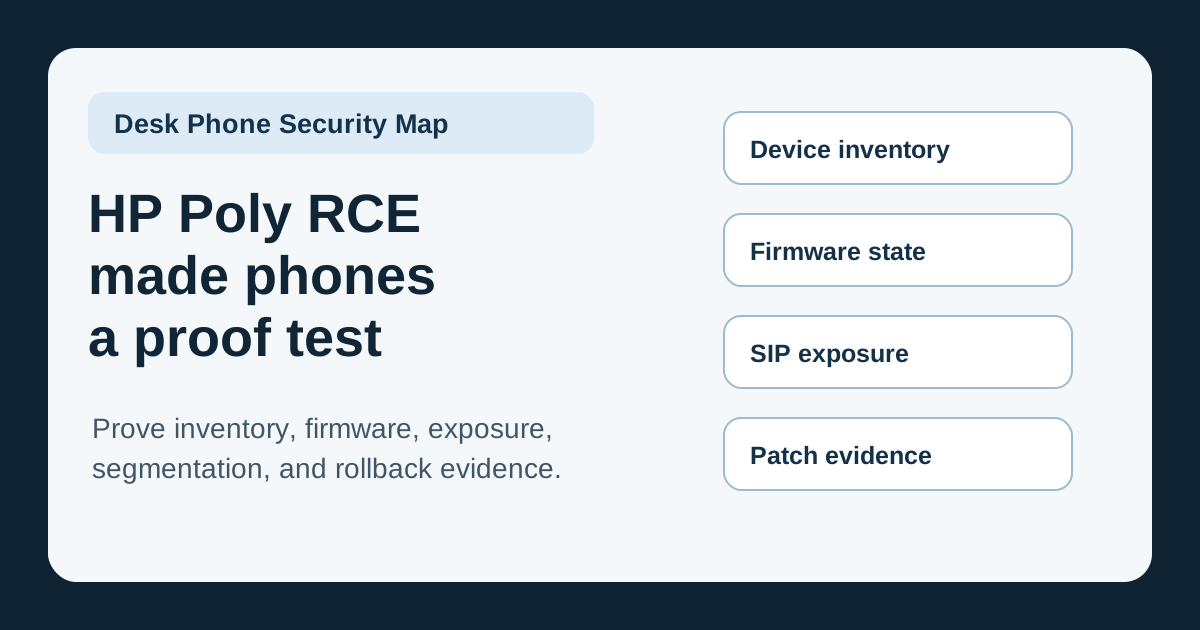
A VoIP buyer should not approve a phone fleet, UCaaS migration, or managed voice provider only because calls work. The buyer needs a security proof map: which phones exist, which firmware is running, whether ICE or exposed SIP paths are enabled, where devices sit on the network, who can patch them, how rollback works, and what evidence proves the fleet is no longer vulnerable.
Desk Phone Security Proof Map
A buyer framework for validating VoIP phone fleets across device inventory, firmware state, ICE and SIP exposure, segmentation, monitoring, rollback, and incident evidence.
What buyers should do next
Export every desk phone, conference phone, ATA, and voice appliance from the phone system, DHCP, switch, and provisioning tools.
Compare affected models and firmware against HP's advisory and NVD's CVE-2026-0826 record.
Verify whether ICE is enabled and whether SIP or management paths are reachable from untrusted networks.
Patch a test device first, then schedule production updates with rollback and validation calls for critical lines.
Ask managed VoIP providers for written proof of inventory, fixed firmware, exposure review, segmentation, and residual-risk ownership.
Buyer bridge
Do the routing audit before buying the buzz.
The winning AI phone stack is the one that preserves context, controls fallback, and lets humans take over without making the customer repeat the story.
Run the AI-ready VoIP audit