
Direct answer
FCC Voximplant consent decree Robocall Mitigation Database compliance plan July 2026: what buyers need to know
The FCC Enforcement Bureau released a July 8, 2026 order adopting a consent decree with Voximplant to resolve an investigation into Robocall Mitigation Database rule violations. The order says Voximplant admitted its RMD certification was noncompliant and agreed to implement a compliance plan. VoIP and CPaaS buyers should treat the action as a provider-proof trigger: verify RMD certification status, provider role, traffic origination, traceback contacts, certification-update process, and post-incident evidence before routing production calls.
This brief cites the source announcement and translates the event into a buyer framework. Verify current vendor terms before changing phone, messaging, or AI routing.
What happened
- The FCC Enforcement Bureau adopted and released the Voximplant consent decree on July 8, 2026.
- The order says the Bureau investigated whether Voximplant complied with Robocall Mitigation Database certification requirements.
- The FCC order states that Voximplant admitted its RMD certification was noncompliant and agreed to implement a compliance plan.
- The FCC record describes RMD rules requiring voice service providers to file certifications and robocall mitigation plans so other providers and regulators can evaluate call-path risk.
- The buyer issue is not only one provider's filing. It is whether every provider in the call path can prove current certification, traceback readiness, and abuse response.
Why this is trending
- The FCC action shows robocall enforcement continuing upstream into provider records, certifications, and compliance plans rather than only downstream call blocking.
- Business voice buyers increasingly rely on CPaaS platforms, SIP trunks, resellers, AI voice tools, and outsourced callers that may all touch one outbound call path.
- A provider can be technically capable and still create buyer risk if its RMD filing, traceback response, certification updates, or abuse controls are weak.
The VoIP Stack Index take
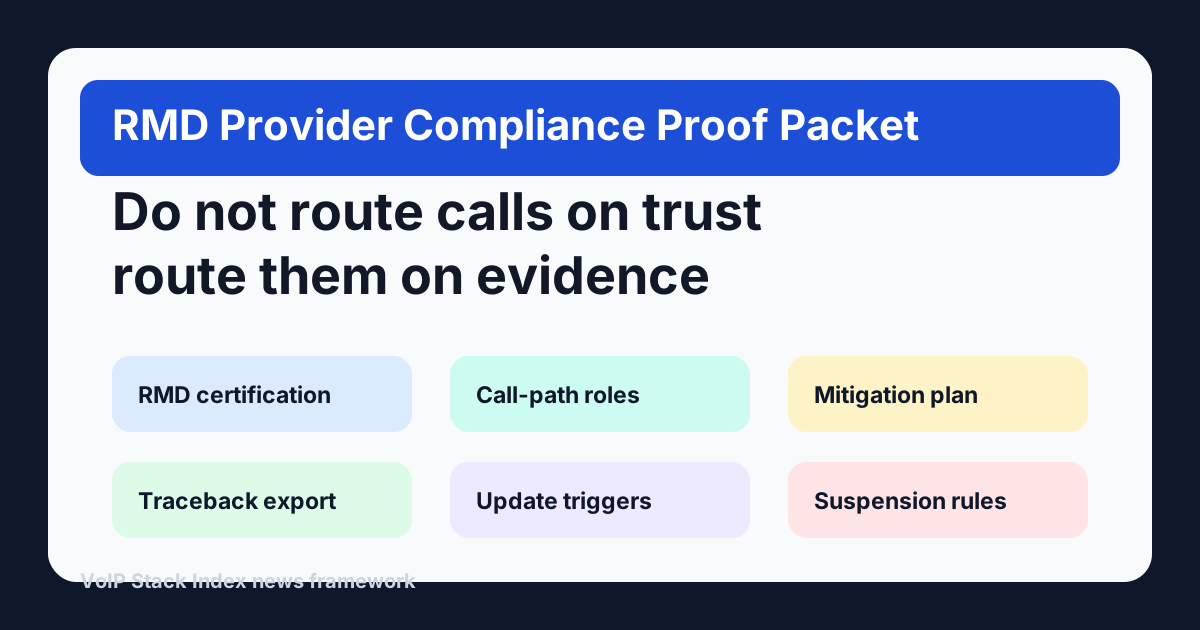
A VoIP buyer should not accept a generic anti-robocall policy page. The buyer needs an RMD Provider Compliance Proof Packet: current RMD certification, provider role, robocall mitigation plan, call-path map, reseller/subaccount controls, traceback contact, certification-update trigger, suspension rule, and evidence export after complaints or traceback notices.
RMD Provider Compliance Proof Packet
A buyer framework for validating voice providers across Robocall Mitigation Database status, call-path roles, certification updates, traceback, suspension rules, and evidence exports.
What buyers should do next
Ask every carrier, CPaaS platform, SIP trunk, AI voice vendor, dialer, and reseller for its current RMD certification details.
Map the actual call path from customer account to number owner, signing provider, intermediate carriers, and terminating handoff.
Request traceback contacts, response SLAs, CDR export samples, SIP-header evidence, complaint handling, and evidence retention terms.
Document certification-update triggers when products, resellers, traffic types, or call paths change.
Define suspension, fallback, and customer-notice rules before a number block is tied to traceback or abuse complaints.
Buyer bridge
Do the routing audit before buying the buzz.
The winning AI phone stack is the one that preserves context, controls fallback, and lets humans take over without making the customer repeat the story.
Run the AI-ready VoIP audit