Direct answer
FCC SK Teleco robocall mitigation database: what buyers need to know
The FCC said on June 12, 2026 that it removed SK Teleco from the Robocall Mitigation Database and mandated U.S. voice service providers and intermediate providers to block calls from the company after repeated robocall-rule violations tied to Walmart-impersonation traffic. For VoIP buyers, the lesson is concrete: provider compliance is a service-continuity requirement, not just legal paperwork.
This brief cites the source announcement and translates the event into a buyer framework. Verify current vendor terms before changing phone, messaging, or AI routing.
What happened
- The FCC's June 12 release says SK Teleco was prohibited from continuing to connect to U.S. networks and removed from the Robocall Mitigation Database.
- The FCC said providers immediately downstream of SK Teleco must begin blocking calls from the provider within 30 days and may initiate blocking within 48 hours where rules allow.
- The FCC order says SK Teleco's RMD removal requires intermediate and voice service providers to cease accepting calls directly from the company.
- Broadband Breakfast independently reported that the Missoula, Montana-based provider failed to respond to requests tied to suspected illegal robocalls.
Why this is trending
- The story shows the operational consequence of RMD failure: a provider can be cut off from U.S. voice networks.
- Robocall enforcement is moving from broad warnings to named provider blocking, which matters to SIP trunk, CPaaS, and AI voice buyers.
- AI voice, outbound reminders, callbacks, and high-volume support traffic all depend on caller trust and provider diligence.
The VoIP Stack Index take
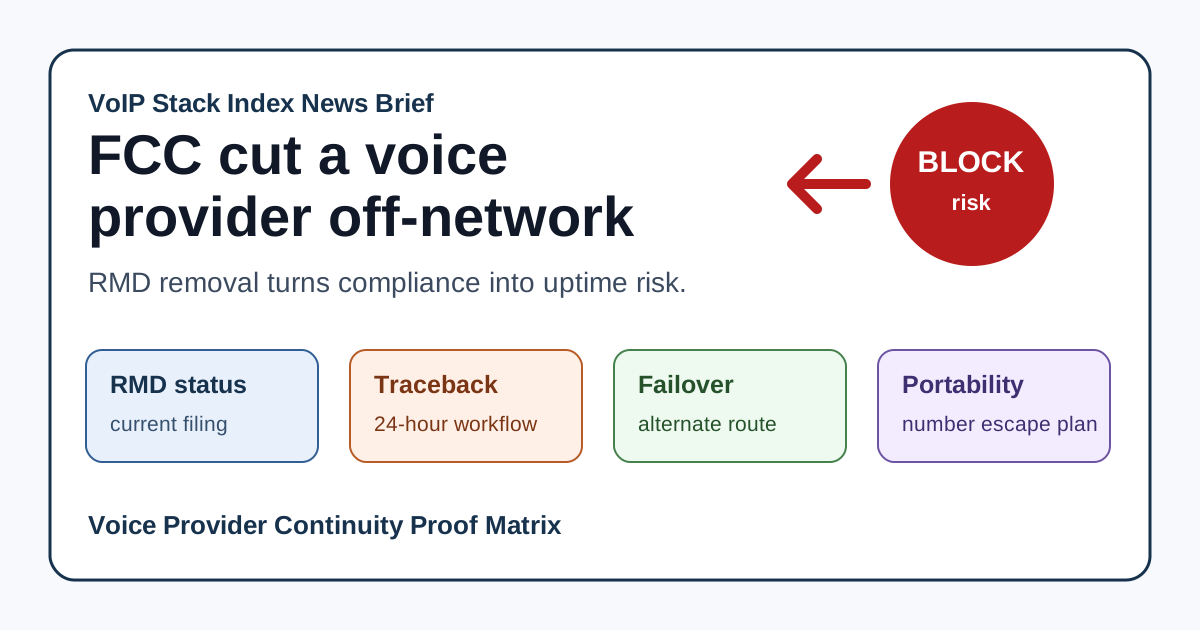
A VoIP buyer should not evaluate a SIP trunk or AI voice provider only by price, latency, or feature list. The provider must also prove it can keep network access: current RMD standing, traceback response discipline, STIR/SHAKEN controls, call-abuse monitoring, downstream notice handling, and a failover path if a route is restricted.
Voice Provider Continuity Proof Matrix
A buyer framework for checking RMD status, traceback response, STIR/SHAKEN posture, downstream blocking risk, failover routing, and number portability before routing critical calls.
What buyers should do next
Check the provider's Robocall Mitigation Database certification before routing production calls.
Ask how the provider responds to traceback requests, suspicious traffic, and customer termination decisions.
Verify STIR/SHAKEN signing, caller-ID ownership checks, spam-label escalation, and route-health reporting.
Create a failover plan for blocked traffic, number portability, alternate SIP routes, and customer notices.
Buyer bridge
Do the routing audit before buying the buzz.
The winning AI phone stack is the one that preserves context, controls fallback, and lets humans take over without making the customer repeat the story.
Run the AI-ready VoIP audit