
Direct answer
FCC call center onshoring VoIP: what buyers need to know
The FCC's onshoring proposal is not only a call-center labor story. The Federal Register notice says the FCC proposes applying requirements to telecommunications, CMRS, interconnected VoIP, cable, and DBS providers or affiliates, and it asks about calls, emails, texts, online chats, sensitive personal information, foreign call centers, and unlawful calls. On June 23, 2026, GMA News reported that Philippine outsourcing and business groups pushed back, arguing location caps would raise costs and degrade service without clear consumer benefit. VoIP buyers should map where customer support is answered before adding AI voice, outsourced agents, or callback routing.
This brief cites the source announcement and translates the event into a buyer framework. Verify current vendor terms before changing phone, messaging, or AI routing.
What happened
- The FCC published its proposed onshoring rule in the Federal Register on April 23, 2026, with reply comments due June 22, 2026.
- The proposal says it would apply to telecommunications services, CMRS, interconnected VoIP service, cable television service, DBS services, and affiliates of those providers.
- The FCC is asking about foreign call centers, other customer service channels such as email, text, and online chat, and steps to deter unlawful foreign-originated calls.
- GMA News reported on June 23 that IBPAP, AmCham Philippines, and the US-ASEAN Business Council filed pushback saying arbitrary geographic caps could increase costs and degrade service quality.
Why this is trending
- The story now has a live conflict: U.S. regulators are exploring onshoring and disclosure rules while Philippine BPO groups are publicly pushing back.
- The proposal names interconnected VoIP, which turns the issue from a generic outsourcing debate into a phone-system procurement and routing risk.
- AI voice and callback workflows blur inbound, outbound, support, text, and chat paths, making location and data-control proof more important.
The VoIP Stack Index take
A VoIP buyer should not treat offshore support as automatically unsafe or automatically cheap. The practical move is to document the route: who answers, where they sit, what data they see, whether callbacks become outbound calls, what must stay domestic, and how the provider proves fallback if regulation, spam labeling, or customer complaints hit.
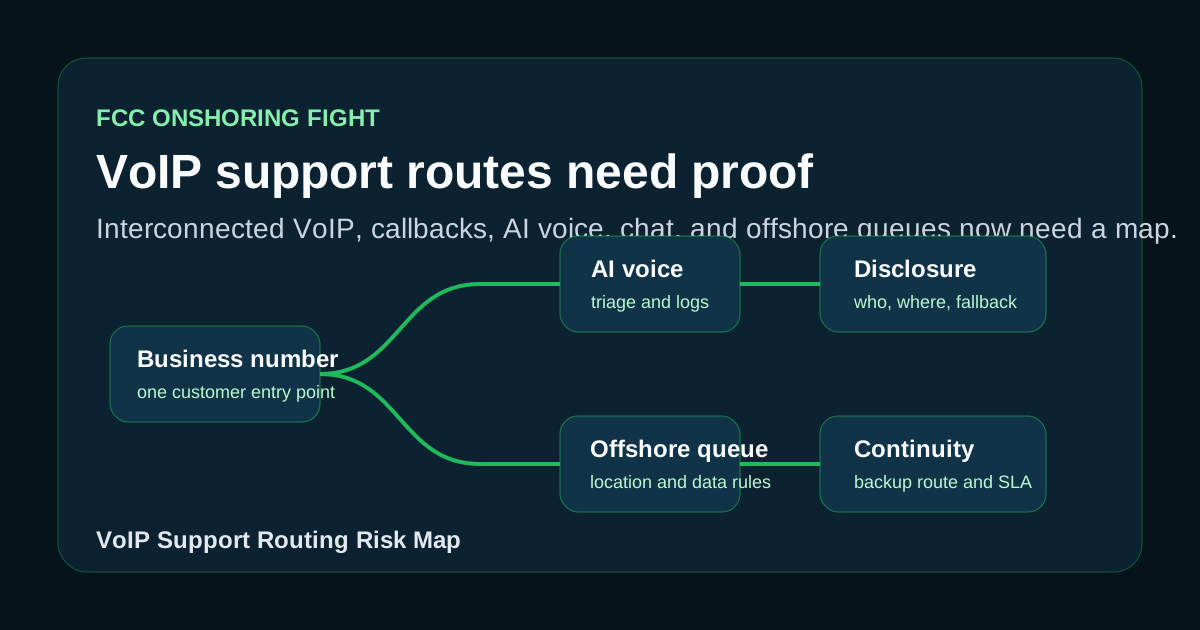
VoIP Support Routing Risk Map
A buyer framework for checking whether business phone, SIP, AI voice, callback, chat, and outsourced support routes can prove location, data handling, disclosure, fallback, and escalation readiness.
What buyers should do next
Map every support route tied to the business phone number: inbound, callback, AI voice, SMS, chat, and outsourced agent queues.
Ask the provider which routes use offshore agents, which data those agents can see, and how location disclosure would be handled.
Define what customer data must stay domestic or human-reviewed before expanding AI voice or outsourced support.
Test failover for blocked calls, spam labeling, provider restriction, offshore queue outage, and customer refusal to use automation.
Buyer bridge
Do the routing audit before buying the buzz.
The winning AI phone stack is the one that preserves context, controls fallback, and lets humans take over without making the customer repeat the story.
Run the AI-ready VoIP audit