
Direct answer
FCC IM Telecom Lifeline enrollment freeze voice provider proof packet: what buyers need to know
The FCC notified IM Telecom on July 27, 2026 that it can no longer enroll new Lifeline subscribers while the agency examines potential additional action. The FCC says IM Telecom apparently violated Lifeline rules and its compliance plan through consent, transfer, non-usage, corporate-control, and bot-related conduct, and that existing legitimate customers can switch providers. VoIP buyers should treat the action as a provider-proof warning: before routing critical voice traffic or customer programs through any provider, require evidence of consent trails, transfer authority, usage controls, bot defenses, ownership approvals, porting continuity, and customer migration support.
This brief cites the source announcement and translates the event into a buyer framework. Verify current vendor terms before changing phone, messaging, or AI routing.
What happened
- The FCC issued a July 27, 2026 release saying it notified IM Telecom that the company may no longer enroll new Lifeline subscribers.
- The FCC says IM Telecom has received more than $262 million in federal Lifeline funds since 2024 based on providing phone and internet service to qualifying low-income Americans.
- The agency says evidence before it indicates apparent violations involving subscriber transfers without consent, a payment scheme tied to non-usage rules, missing affirmative consent, unapproved corporate-control changes, and bot use to evade limits on suspicious enrollment and transfer activity.
- The FCC says federal agents executed search warrants this month on multiple individuals associated with IM Telecom.
- The release says California and Oregon have issued cease-and-desist letters limiting IM Telecom's ability to operate in those states based on concerning activity.
- The FCC says IM Telecom must work with the FCC and USAC to help existing legitimate customers switch to another Lifeline provider, including number porting and benefit transfers.
Why this is trending
- The action is current and specific: a federal voice-and-broadband subsidy provider was blocked from adding new Lifeline subscribers.
- The FCC's allegations touch the controls business buyers also rely on: consent, customer transfer authority, usage evidence, automation abuse prevention, corporate ownership approval, and number porting.
- Provider compliance failures can become voice continuity problems when customers need to migrate numbers, benefits, or routes under regulatory pressure.
- The story follows broader FCC attention on robocall mitigation, voice-provider KYC, and provider responsibility, making compliance proof a procurement issue rather than a back-office detail.
The VoIP Stack Index take
A business phone buyer should not evaluate a provider only by minutes, seats, and feature lists. The buyer needs a Voice Provider Enrollment Integrity Proof Packet: how the provider captures consent, prevents unauthorized transfers, proves usage, detects bots and suspicious signups, discloses ownership changes, supports porting, and helps customers move if a regulator limits service activity.
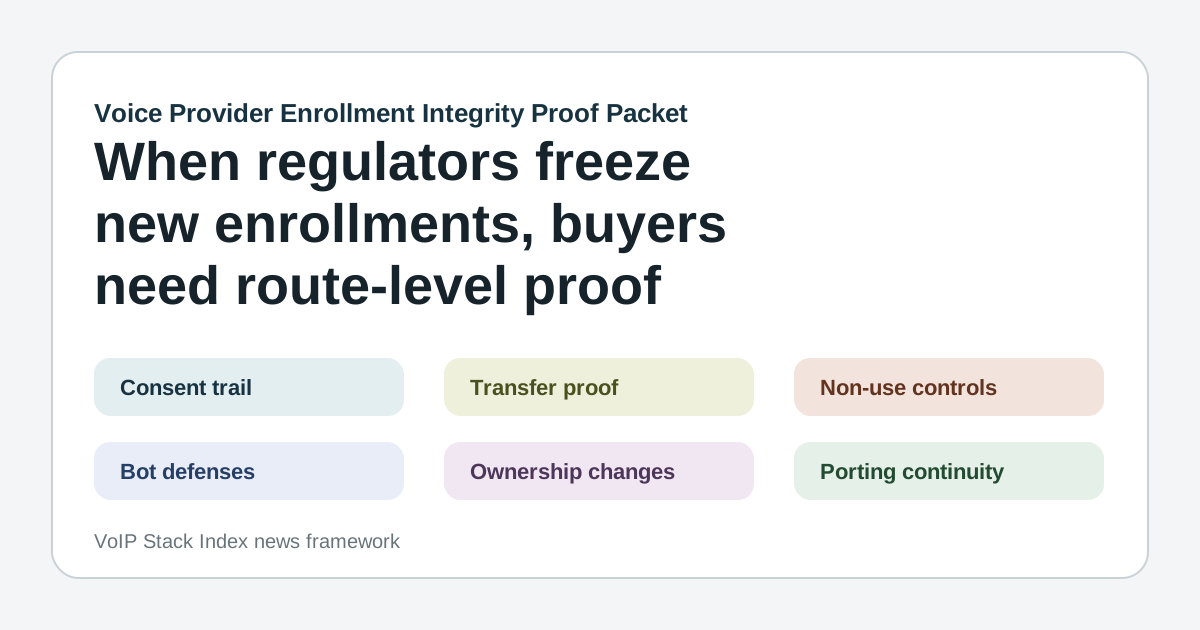
Voice Provider Enrollment Integrity Proof Packet
A VoIP buyer framework for validating provider enrollment integrity across subscriber consent, transfer authority, usage controls, bot defenses, ownership approvals, porting continuity, and migration support.
What buyers should do next
Ask voice providers how they capture and retrieve customer consent for enrollment, transfer, routing, messaging, and service changes.
Request a sample transfer-dispute packet, including authorization, timestamp, agent or system ID, and escalation owner.
Check whether usage, non-use, and payment controls can be audited at customer and number level.
Ask what bot, velocity, duplicate, and suspicious-application controls apply to signups, ports, and campaign traffic.
Review ownership, reseller, distributor, and state/federal approval evidence before routing regulated or high-volume voice programs.
Confirm number-porting and customer-migration support if the provider is blocked, suspended, sold, or limited by a regulator.
Buyer bridge
Do the routing audit before buying the buzz.
The winning AI phone stack is the one that preserves context, controls fallback, and lets humans take over without making the customer repeat the story.
Run the AI-ready VoIP audit