
Direct answer
FCC Digital Solutions robocall blocking order 14 days June 2026 VoIP: what buyers need to know
The FCC Enforcement Bureau released an Initial Determination Order and Order to Show Cause against Digital Solutions Inc. on June 29, 2026. The order says Digital Solutions has 14 calendar days to respond, which puts the response window around July 13, 2026. If the Bureau later issues a final determination, immediate downstream providers would have to block and stop accepting traffic directly from Digital Solutions 30 days after that final order. VoIP buyers should treat the case as a call-path proof test.
This brief cites the source announcement and translates the event into a buyer framework. Verify current vendor terms before changing phone, messaging, or AI routing.
What happened
- The FCC order says the Enforcement Bureau initially determined that Digital Solutions had not complied with robocall mitigation rules for voice service providers.
- The Bureau said Digital Solutions had 14 calendar days from the June 29 release date to provide a final response and demonstrate compliance.
- The order says a later final determination could require immediate downstream providers to block and cease accepting all traffic received directly from Digital Solutions 30 calendar days after the final order.
- The FCC also directed Digital Solutions to show cause why it should not be removed from the Robocall Mitigation Database for an alleged SIP call authentication certification deficiency.
- Law360 independently covered the enforcement posture as the FCC preparing to block call traffic from the telecom over robocalls if the response does not satisfy the agency.
Why this is trending
- The story is on an active clock: the 14-day response window from the June 29 order runs into mid-July, so providers and downstream buyers cannot treat it as stale enforcement history.
- The order connects robocall mitigation, SIP authentication, RMD certification, traceback response, and downstream blocking in one concrete provider case.
- Business phone buyers often know the brand on their dashboard but not the legal entity, upstream carrier, reseller, API path, or blocking exposure behind production calls.
The VoIP Stack Index take
A VoIP buyer should not approve a SIP trunk, UCaaS provider, reseller, contact-center voice path, or programmable voice vendor only because calls complete today. The buyer needs a call-path blocking proof packet: legal entity name, RMD filing, SIP authentication status, STIR/SHAKEN role, traceback owner, customer-vetting evidence, immediate downstream exposure, and alternate routing for numbers that cannot go dark.
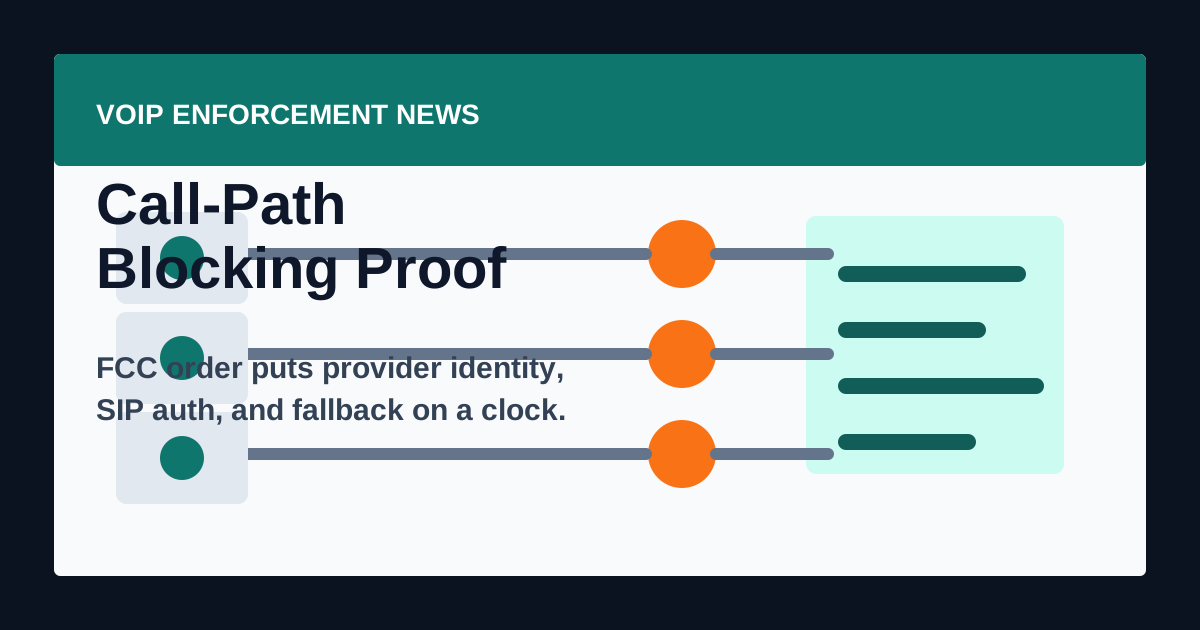
VoIP Call-Path Blocking Proof Packet
A buyer framework for validating VoIP providers across legal entity identity, RMD certification, SIP authentication, traceback response, customer vetting, downstream blocking exposure, and fallback routing.
What buyers should do next
Ask each VoIP, SIP, UCaaS, contact-center, reseller, and programmable-voice vendor for the legal entity that originates or carries your traffic.
Match that entity to RMD certification evidence and confirm whether the visible vendor is a reseller, API platform, carrier, intermediate provider, or managed wrapper.
Request SIP authentication, STIR/SHAKEN, traceback, abuse-response, and customer-vetting proof for production traffic.
Map which numbers, trunks, queues, campaigns, and after-hours routes would be affected if a provider were blocked or removed from the RMD.
Build and test alternate routing for revenue, safety, support, and executive numbers before an enforcement clock forces rushed action.
Buyer bridge
Do the routing audit before buying the buzz.
The winning AI phone stack is the one that preserves context, controls fallback, and lets humans take over without making the customer repeat the story.
Run the AI-ready VoIP audit