Direct answer
FCC 911 modernization IP voice routing proof packet: what buyers need to know
The FCC circulated a September 9, 2026 fact sheet and draft Notice of Inquiry for Modernizing the 911 Framework, PS Docket No. 26-197. The draft says emergency access is now moving across IP networks, Wi-Fi, satellite direct-to-device, OTT apps, IoT devices, MVNOs, video conferencing and enterprise-grade connectivity, while existing 911 rules still rely on service categories built for older network boundaries. VoIP buyers should respond by asking providers for an IP Voice 911 Routing Proof Packet before relying on new calling apps, failover paths, UCaaS seats, SIP trunks or branch-phone designs.
This brief cites the source announcement and translates the event into a buyer framework. Verify current vendor terms before changing phone, messaging, or AI routing.
What happened
- The FCC's September 9 fact sheet says the Notice of Inquiry would examine the core objectives of the 911 framework in light of rapid communications-technology change.
- The circulated draft lists a November 16, 2026 comment date and a December 15, 2026 reply-comment date.
- The draft says providers generally must transmit and route 911 calls to the appropriate public safety answering point with location information and a callback number.
- It names existing 911 obligations across legacy wireline, wireless, covered text, interconnected VoIP, multi-line telephone systems, satellite service and relay services.
- The draft highlights market convergence across IP networks, Wi-Fi calling, satellite direct-to-device, OTT applications, IoT devices, MVNOs, video conferencing and enterprise connectivity.
- APCO reported that the Public Safety Next Generation 9-1-1 Coalition asked the FCC to make NG911 interoperability mandatory across voice, text, data and multimedia call flow.
Why this is trending
- The inquiry connects emergency calling to the same IP, cloud, app and device ecosystem that business-phone buyers are modernizing now.
- It moves beyond classic interconnected VoIP questions and asks how scope should work when networks, operating systems, applications and devices share the call path.
- The FCC draft is not final action, but the comment calendar creates a policy window that telecom vendors, public-safety groups and enterprise buyers will watch.
- NG911 interoperability pressure makes emergency-call evidence a business-continuity issue, not only a regulatory checkbox.
- Buyers adding AI receptionists, UCaaS apps, branch failover, satellite backup or hybrid work phones need to know when and how 911 still routes correctly.
The VoIP Stack Index take
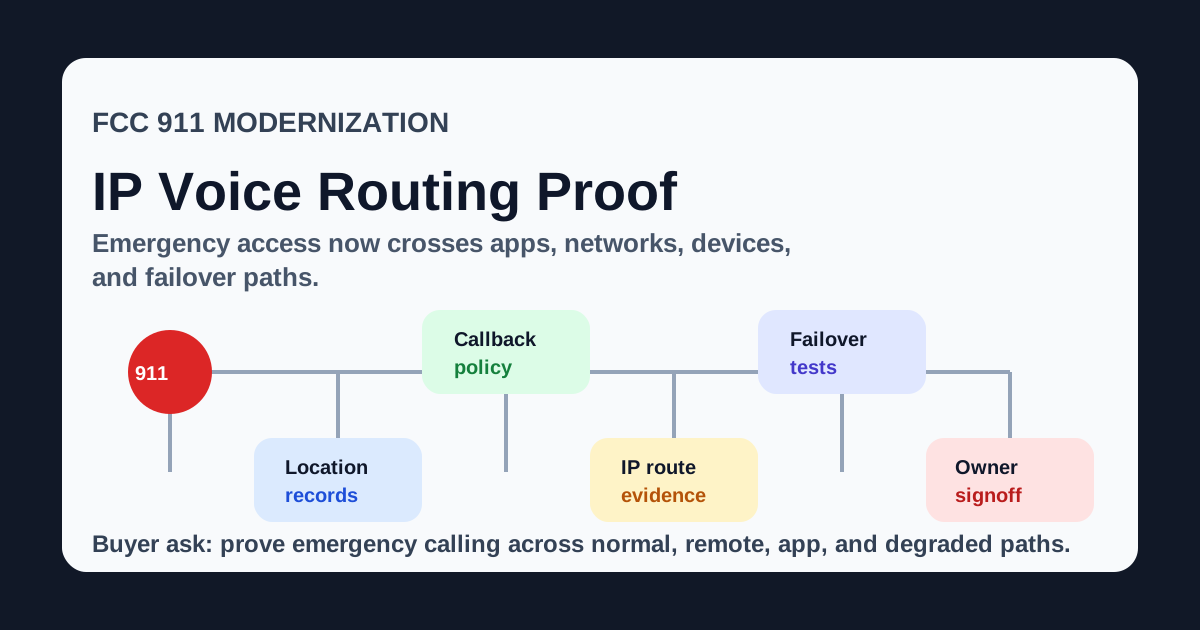
A VoIP buyer should not accept generic E911 assurances when the proposed stack includes UCaaS apps, softphones, SIP trunks, mobile apps, Wi-Fi, branch routers, satellite backup, device operating systems or managed connectivity. Ask for an IP Voice 911 Routing Proof Packet showing exactly which endpoints can dial emergency services, which location and callback records are sent, how IP and failover routes behave, who owns corrections, and what evidence closes a failed test.
IP Voice 911 Routing Proof Packet
A VoIP buyer framework for validating emergency-calling scope, location records, callback numbers, IP routing, interoperability, outage processes and vendor ownership.
What buyers should do next
List every endpoint, app and location that users may treat as a business phone.
Ask the provider for current E911, dispatchable-location, callback and warning-screen evidence.
Run supervised test calls or provider-approved validation for each representative site and failover path.
Document who can edit location records, who receives failure alerts and who owns post-incident correction.
Repeat the proof process before adding satellite backup, new UCaaS apps, meeting-room devices or AI receptionist call paths.
Buyer bridge
Do the routing audit before buying the buzz.
The winning AI phone stack is the one that preserves context, controls fallback, and lets humans take over without making the customer repeat the story.
Run the AI-ready VoIP audit