Direct answer
Cisco SD-WAN Zero-Day Puts Voice Network Recovery on Alert: what buyers need to know
Cisco says CVE-2026-76504 can let a remote attacker obtain administrator access to affected Catalyst SD-WAN Manager systems without authentication, and confirms exploitation in September. Voice buyers using that management stack should obtain exposure, fixed-version and incident-review evidence from the network owner, then validate call paths after remediation. A software upgrade and a compromise assessment are separate decisions.
This brief cites the source announcement and translates the event into a buyer framework. Verify current vendor terms before changing phone, messaging, or AI routing.
What happened
- Cisco published its critical advisory on September 30, 2026 and assigned the vulnerability a CVSS base score of 9.8.
- The advisory identifies an API authentication weakness in Catalyst SD-WAN Manager and confirms active exploitation discovered during a support investigation.
- Cisco provides fixed releases and says there is no workaround. Customers should use its current advisory and compatibility guidance to choose the appropriate upgrade.
- Cisco recommends reviewing management-server logs for unexpected authentication activity and working with its Technical Assistance Center when compromise is suspected.
- The Center for Internet Security also issued an advisory noting exploitation and the risk of unauthenticated administrative access.
Why this is trending
- Active exploitation makes this a present operational issue, rather than a hypothetical hardening exercise.
- Centralized network administration concentrates authority over many locations, including branches that depend on reliable voice connectivity.
- The buyer issue extends to managed services: a customer may operate phones without directly controlling the SD-WAN management system.
- Patch completion alone does not document whether an attacker previously changed policy, credentials or configuration.
The VoIP Stack Index take
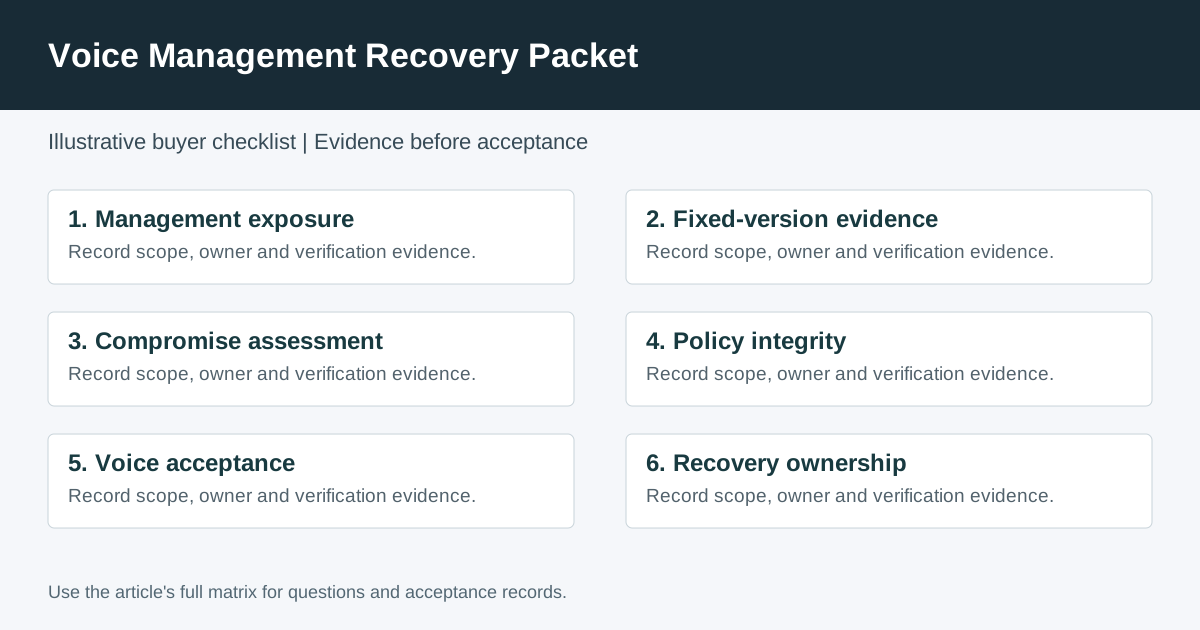
Request the Voice Management Recovery Packet from the MSP or network team. Tie each piece of evidence to your actual management instances and voice-serving sites. SD-WAN Manager is not the same product as a desk phone, SIP server or SBC; first confirm that your deployment uses the affected component. The framework below is our planning asset, not a Cisco remediation procedure or evidence of an incident at any customer.
Voice Management Recovery Packet
Cisco's exploited SD-WAN Manager flaw makes management exposure, patch evidence and voice-route recovery a buyer checkpoint.
What buyers should do next
Confirm with your provider whether affected SD-WAN Manager software administers any of your voice-serving sites.
Obtain documented exposure and fixed-release evidence for each relevant instance.
Preserve and assess suspicious activity separately from the software upgrade.
Review policy and configuration against a known trusted baseline.
Run approved voice-route and failover checks before closing the change; do not place uncoordinated live emergency test calls.
Buyer bridge
Do the routing audit before buying the buzz.
The winning AI phone stack is the one that preserves context, controls fallback, and lets humans take over without making the customer repeat the story.
Run the AI-ready VoIP audit