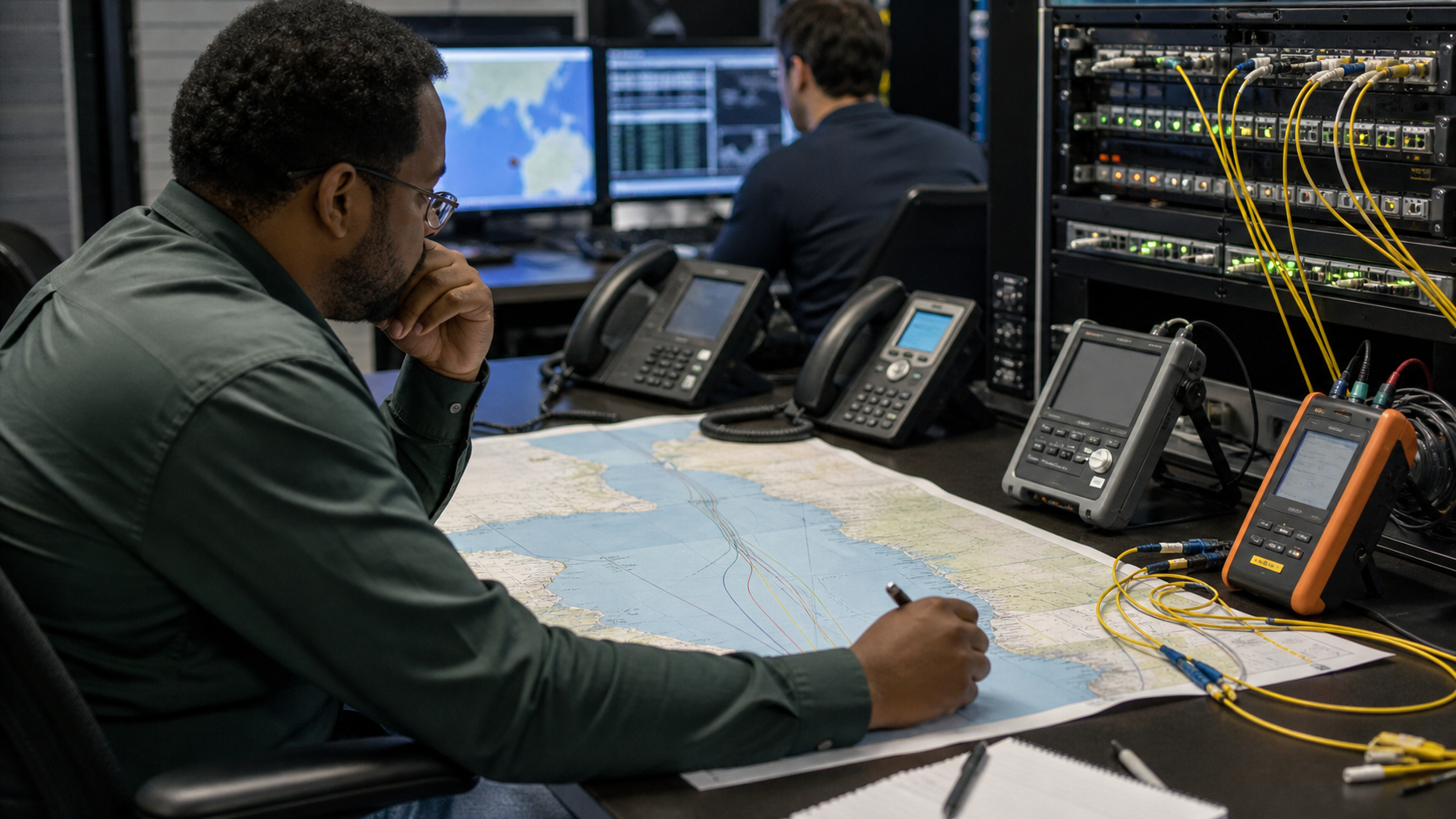
Direct answer
Caribbean Central America undersea cable 175.8 million voice route sovereignty proof: what buyers need to know
AP reported on July 28, 2026 that the U.S. administration notified Congress it intends to spend $175.8 million to replace aging undersea telecommunications cables in the Caribbean and Central America with secure U.S. and trusted alternatives. The buyer lesson is not to choose a phone system by feature list alone. VoIP buyers should require a Voice Route Sovereignty Proof Packet showing route inventory, carrier and cable diversity, supplier exposure, failover tests, number-porting options, incident communications, and migration evidence before critical voice traffic depends on a single opaque path.
This brief cites the source announcement and translates the event into a buyer framework. Verify current vendor terms before changing phone, messaging, or AI routing.
What happened
- AP reported that the administration notified Congress late last week of an intended $175.8 million spend to replace aging undersea telecommunications cables in the Caribbean and Central America.
- AP said the stated goal is to prevent China from moving into the regional telecom infrastructure sector.
- The project described to Congress is called the Countering CCP Control of Caribbean and Central America Undersea Cables project.
- AP reported the program would fund strategically selected undersea cable infrastructure and support foreign governments partnering with private cable installers.
- The reported money would support replacement of outdated regional cables with secure U.S. and trusted alternatives, with projects benefiting countries including El Salvador, Guatemala, Honduras, Nicaragua, and Haiti.
- NTIA separately announced a July 27, 2026 global Call to Action for 6G Leadership and Security focused on open, interoperable, secure, resilient, and trusted communications networks.
Why this is trending
- Undersea cable stories usually stay in infrastructure circles, but this report connected cable replacement directly to national-security funding and telecommunications dependence.
- Voice, UCaaS, contact-center, SIP, and AI phone traffic still depend on carrier networks and upstream transport paths that buyers rarely see in procurement decks.
- The story creates a practical diligence question for buyers with Caribbean, Central America, offshore support, or cross-border customer operations: which routes keep calls alive if one carrier, cable, landing path, or supplier becomes constrained?
- The NTIA 6G security call adds broader policy momentum around trusted communications, making route proof part of telecom procurement rather than a network-engineering afterthought.
The VoIP Stack Index take
A VoIP buyer should ask providers to prove route sovereignty, not merely uptime. The packet should show which carriers and upstream paths carry calls, whether alternate routes cross different cables and landing points, which suppliers operate critical infrastructure, what failover tests prove, how numbers port during disruption, and who tells customers when a geopolitical or infrastructure event affects voice quality.
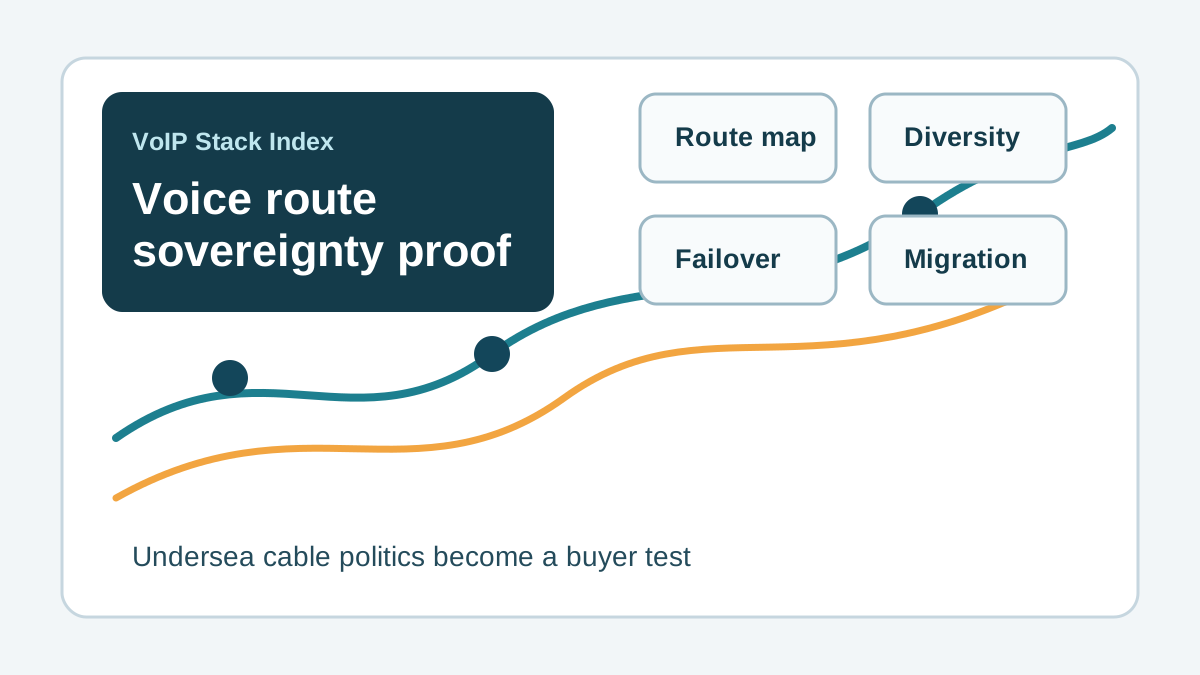
Voice Route Sovereignty Proof Packet
A VoIP buyer framework for validating carrier routing, cable diversity, trusted supplier exposure, failover tests, continuity communications, and migration evidence when telecom infrastructure becomes geopolitical.
What buyers should do next
Ask each VoIP, UCaaS, SIP, and contact-center provider for a route inventory by country, number type, support queue, and carrier.
Verify whether backup paths use distinct carriers, regions, gateways, and transport dependencies rather than the same hidden upstream route.
Request supplier-risk evidence for carriers, resellers, subcontractors, and regions that carry sensitive or customer-facing voice traffic.
Run synthetic inbound and outbound calls through primary and failover routes, including IVR, recording, AI-agent, and emergency-contact scenarios.
Confirm number-porting, temporary forwarding, and customer-notice procedures if a carrier, cable, landing point, or regulator disrupts service.
Use the VoIP Stack Index AI-ready VoIP audit and VoIP cost calculator to convert route proof into procurement requirements.
Buyer bridge
Do the routing audit before buying the buzz.
The winning AI phone stack is the one that preserves context, controls fallback, and lets humans take over without making the customer repeat the story.
Run the AI-ready VoIP audit